Brampton

Mortgage Broker in Brampton, Ontario: What You Actually Need (2026 Guide)


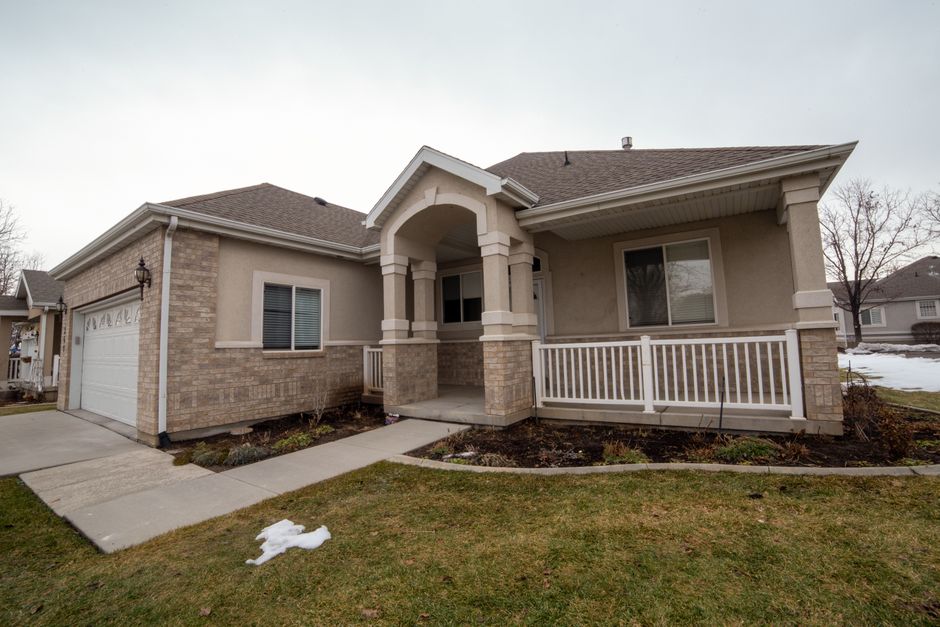
Suburban Brampton neighbourhood street representing the local Ontario mortgage market
Photo by Mathias Reding on Pexels
Jenny Tate By Jenny Tate
·6 min read·Last updated: May 2026
General information only. This article is for educational purposes and does not constitute personalized financial, mortgage, or legal advice. Rates, policies, and regulations are subject to change. Always consult a licensed mortgage professional before making any mortgage decisions. Jenny Tate, Mortgage Agent Level 1, FSRA #M22002086, Tango Financial Inc. FSRA #13691.

You typed "mortgage broker Brampton" into Google. That's already the most common opening move for buyers, refinancers, and renewers in this city, so you're in good company. Here's the slightly inconvenient truth: the question you typed is not quite the question that decides your file.

The decision that actually decides whether you get a great rate, a mediocre rate, or a flat decline in Brampton is not which broker you call. It's which lender your broker routes your file to, out of 50-plus options across the country. A self-employed trucking owner-operator, a newcomer professional with thin Canadian credit, a multi-generational family pooling a gift, and a Castlemore move-up buyer all need completely different lenders. Brampton has more of each of those profiles than almost any other GTA city, which is exactly why lender-routing matters more here than in, say, downtown Toronto. The short version of this guide is: figure out which Brampton archetype you fit, pick a broker who knows the matching lender, and stop letting your bank's branch underwriter price your file by their template. The long version is the rest of this article.

In plain English, that's what an independent mortgage agent in Brampton, Ontario does for a living. Pair this guide with our mortgage agent versus bank in Toronto comparison if you're also weighing the branch route.

Short answer

A mortgage agent in Brampton, Ontario routes your file across 50-plus lenders, which is critical because Brampton has an unusually high share of self-employed and business-for-self borrowers whose income does not fit Big-Five templated mortgages. Active shopping typically beats bank first offers by 0.20%-0.60%, saving $1,800-$5,400 per year on a $900,000 mortgage. Brampton also has no municipal land transfer tax, a $14,000-$20,000 saving versus a comparable Toronto purchase.

Brampton 2026 market: prices by neighbourhood

Per Toronto Regional Real Estate Board (TRREB) data through early 2026, Brampton price ranges look roughly like this by neighbourhood and property type.

  • Premium detached: Castlemore, Toronto Gore Rural Estate, Vales of Castlemore, ranging $1.4M to $2.2M.
  • Mid-range detached: Springdale, Heart Lake, Fletcher's Meadow, Credit Valley, ranging $1.0M to $1.4M.
  • Older detached: Bramalea, Downtown Brampton, Northwood Park, ranging $850K to $1.1M.
  • Townhomes: across newer master-planned communities (Mount Pleasant, Sandalwood, Northwest Brampton), $750K to $950K.
  • Condo apartments: Mount Pleasant transit hub and central Brampton, $500K to $650K.
  • Mount Pleasant transit village premium: new builds within walking distance of the GO station typically carry a 5% to 10% premium over comparable units further from transit.

Three things shape Brampton mortgage files differently from anywhere else in the GTA. First, there's no municipal land transfer tax in Peel Region. On a $1.1M Brampton purchase, that quietly saves you $14,000 to $20,000 at closing compared with an identical Toronto property (provincial Ontario LTT still applies, of course). Second, the self-employment rate runs noticeably above the GTA average per Statistics Canada, driven by Brampton's trucking, contracting, and small-business sector, including one of the largest Sikh-Canadian trucking communities anywhere in North America. The practical implication: standard T4-only bank underwriting fits a smaller share of Brampton files than you'd expect, which is why business-for-self lender programs come up over and over here. And third, per Census 2021 data, over 73% of Brampton residents are first or second-generation immigrants, with major Punjabi, Caribbean, and Filipino communities. Newcomer credit programs, offshore down-payment sources, and multi-generational gift arrangements show up on a healthy share of files.

Stress-test math for a typical Brampton detached purchase: a $1.1M home with 20% down ($220,000) requires an $880K mortgage. Per OSFI's B-20 guideline, qualification happens at the greater of 5.25% or contract rate plus 2%. At a 4.79% contract rate, that means qualifying at 6.79%. Annual household income needed with no other debt: roughly $190,000. This is why dual-income households and multi-generational co-borrower structures dominate Brampton's move-up segment.

The framework: what Brampton buyers and owners actually need

Run YOUR numbers

Model your Brampton mortgage scenario before shopping rates.

Open the Ontario mortgage calculator

Brampton files fall into five broad groups, each with complexity the Big-Five branches handle awkwardly.

  1. Trucking entrepreneurs and owner-operators: Brampton hosts one of the largest Sikh-Canadian trucking communities in North America. Owner-operator income typically flows through a personal corporation. Personal T1 income often understates real cash flow because legitimate business expenses, vehicle leases, and fuel costs are written down. Most Big-Five branches underwrite the two-year T1 average, which can decline a file the actual cash flow supports easily. Several monoline and B-lender business-for-self programs use notice of assessment, statement of earnings, or 12-month bank-statement review instead.
  2. Newcomer South Asian, Caribbean, and Filipino professionals: over 73% of Brampton residents are first or second-generation immigrants. Files often include strong income but thin Canadian credit history, offshore down-payment sources, and non-resident family members on the file. HSBC, BMO, RBC, and several monolines run specific newcomer programs that work around the credit-history gap. Branches default to "thin file" pricing instead, which can add 0.30% to 0.80% to the rate.
  3. Multi-generational families: very common in Brampton, with down-payment gifts ($150K to $400K), co-ownership structures, and sometimes parents as co-signers. Gift letter timing matters: most lenders require gifted funds in the buyer's account 90 days before close. Non-resident parents (offshore gift sources) are handled differently lender by lender; monolines tend to be more flexible than Big-Five.
  4. Move-up buyers within Peel Region: selling a Bramalea townhome or Heart Lake detached, buying a larger home in Springdale, Castlemore, or Fletcher's Meadow. Bridge financing timing and prepayment penalties dominate the conversation.
  5. Pre-construction and new-build buyers: Mount Pleasant, Northwest Brampton, and Heart Lake have heavy new-build activity. Phased deposits (5% on signing, 5% at three milestones), 24 to 36 month occupancy timelines, builder preferred-lender financing that is not always competitive. Specialized lenders handle pre-construction with rate-hold mechanics that differ from standard purchases.

In plain English, what an independent mortgage agent does is read your full file, pick the lender most likely to approve at the best terms, and negotiate rate without you needing to play one bank against another. The catch: most Brampton buyers do not realize the alternative exists until they have already accepted a sub-optimal offer or, worse, a decline at the branch.

Mortgage broker vs mortgage agent in Brampton: what is the difference?

If you searched for a "mortgage broker in Brampton," you are part of the largest group of Brampton mortgage shoppers. The terms "mortgage broker" and "mortgage agent" get used interchangeably in everyday conversation, but in Ontario they are distinct licence classes under FSRA (the Financial Services Regulatory Authority of Ontario). Knowing the difference matters less for the rate you get and more for understanding who is legally responsible for your file.

Per FSRA's licensing framework:

  • Mortgage Agent (Level 1): Licensed to deal in all residential mortgages including private mortgages. Works under the supervision of a Principal Broker at a registered brokerage. This is Jenny Tate's licence class (FSRA #M22002086), and it is the most common licence in the Brampton mortgage broker community.
  • Mortgage Broker: Has additional licensing that lets them supervise other agents at a brokerage. Operationally, a Brampton mortgage broker shops the same lender pool as a Brampton mortgage agent. There is no difference in your access to lenders or rates.
  • Principal Broker: One designated broker per brokerage, legally accountable for FSRA compliance, reporting, and supervising the brokerage's mortgage agents.

From your perspective as a Brampton homebuyer, the distinction is largely procedural. Whether your file is handled by a Brampton mortgage broker or a Brampton mortgage agent, you have access to the same 50-plus lender panel, the same rate negotiation, and the same legal protections under FSRA's standards of practice. What actually matters: the individual's experience, lender relationships, communication discipline, and file-routing judgment, not the licence class on the business card.

Where the terminology genuinely matters: when you read a contract or a Statement of Disclosure. A mortgage broker signs as a broker, an agent signs as an agent, and the principal broker takes ultimate FSRA-level responsibility. If a Brampton mortgage agent represents your file, the brokerage (in Jenny's case, Tango Financial Inc., FSRA #13691) is your formal counterparty for compliance purposes.

Practical takeaway for Brampton shoppers: when you search "mortgage broker Brampton," the providers you find will be a mix of brokers, agents, and principal brokers, all licensed by FSRA, all able to shop 50-plus lenders. Focus the comparison on responsiveness, lender expertise on your specific file type (Bramalea detached, Mount Pleasant Village condo, newcomer, multi-generational family, investor), and online review track record. The licence-class label is the least important factor in your outcome.

The agent-versus-bank decision in Brampton

When you visit a Brampton branch of any Big-Five for a mortgage, the specialist works for that bank and offers one set of products. A Brampton mortgage agent shops the same file across the full panel at once. Per FCAC and broker industry data, active shoppers typically beat the bank's first offer by 0.20% to 0.60% on equivalent terms. On a typical $900,000 Brampton mortgage at a 5-year fixed term:

  • 0.20% delta: roughly $1,800 first-year interest savings, about $9,000 over the term.
  • 0.40% delta: roughly $3,600 first-year, about $18,000 over the term.
  • 0.60% delta: roughly $5,400 first-year, about $27,000 over the term.

The rate gap is half the story. On a self-employed Brampton file, the lender match determines whether you are approved at all. A bank cannot refer you to a competitor; an agent can.

No direct cost to you: in the vast majority of residential mortgage transactions in Ontario, the mortgage agent's fee is paid by the funding lender as a finder's fee. You receive independent, market-wide advice, full application management, and access to dozens of lenders at no direct cost.

What 50-plus lenders means for your file

Home keys handed over at closing on a Brampton mortgage
Photo by RDNE Stock project on Pexels

The Canadian residential mortgage market has four broad lender tiers. Each has its own sweet spot, and each handles Brampton file complexity differently.

TierExamplesBest fit for Brampton filesTypical rate position (May 2026)
Big-Five banksRBC, TD, Scotiabank, BMO, CIBCPrime files, clean T4 income, simple structurePosted-rate-discount; often 0.20% to 0.40% above market
Credit unionsMeridian, DUCA, AlternaCommunity-focused borrowers, flexible on co-signers and giftsCompetitive with banks; slower service
Monoline lendersMCAP, First National, CMLS, Equitable BankBest rates on prime files; strong on business-for-self and stated-income programsOften 0.20% to 0.40% below Big-Five
Alternative ("B") lendersHome Trust, Equitable Bank (B side), HaventreeSelf-employed with complex income, recovering credit, newcomer files1.5% to 3% above prime files

Tier positioning is illustrative, not personalized. Actual rate access depends on your file's underwriting strength, insurance status, and loan-to-value.

Per FSRA, Ontario mortgage agents licensed as Mortgage Agent Level 1 (Jenny's licence class) can deal in all residential mortgages, including private and alternative-lender financing. That covers the full residential spectrum across all four tiers above.

Common Brampton scenarios

The trucking entrepreneur or owner-operator

Brampton is a North American hub for the long-haul trucking industry, with one of the largest Sikh-Canadian trucking communities anywhere on the continent. The typical file: T4A or self-employed income through a personal corporation, two-year average T1 income of $80K to $120K declared, but actual gross household cash flow of $150K to $250K once spouse and family-operated dispatch business are included. Big-Five branches underwrite on declared T1 average and often decline these files at the door. Alternative lender programs that look at deposit history, statement of earnings, or 12-month bank-statement review can underwrite the same file at a meaningfully larger mortgage amount. The catch: lender selection matters more than rate. Our self-employed mortgage path in Canada walks through the qualifying mechanics.

The newcomer South Asian or Caribbean professional

Arrived in Canada within the last two to four years (typically through Express Entry, Provincial Nominee Program, or family sponsorship), strong income in software, healthcare, accounting, or skilled trades, thin Canadian credit history. HSBC, BMO, and RBC run specific newcomer programs that underwrite around the credit-history gap, often accepting 12 to 36 months of Canadian employment with one major credit reference. Several monolines accept English-translated overseas credit reports. The wrong door at the branch results in a 0.30% to 0.80% rate premium relative to what the right program offers for the same file.

The multi-generational family file

Down payment includes a substantial gift from parents (often $150K to $400K), or parents act as co-signers. Gift letter timing is critical: most lenders require gifted funds to be in the buyer's account 90 days before close, with a paper trail showing source. Co-signers' income gets fully counted but they are equally responsible for the mortgage. Non-resident parents (overseas gift sources, very common in Brampton's South Asian community) are handled very differently lender by lender; monolines tend to be more flexible than Big-Five. Some files structure as joint tenancy with adult children to handle long-term estate planning at the same time.

The move-up buyer in Springdale or Castlemore

Selling a Bramalea or Heart Lake townhome and buying a $1.2M-plus detached in Springdale, Castlemore, or Toronto Gore. Common challenge: timing the bridge between mortgage maturity and new closing. Walk through the rate math and alternatives in our Ontario bridge financing playbook.

The investor with a Brampton rental portfolio

Brampton has an unusually high rate of multi-property household ownership in the South Asian community, often driven by extended-family wealth pooling and inter-generational property transfer planning. Files typically include 2 to 5 rental properties (often townhomes in Springdale, Mount Pleasant condos, or older Bramalea detached). Big-Five guidelines cap the number of rental mortgages a single borrower can hold (typically 4 to 5 across the bank). Once you exceed the threshold, monoline or private financing on additional properties becomes the only path. Rental income offset (how much confirmed rental income counts against your TDS ratio) varies 50% to 100% across lenders.

The pre-construction deposit buyer

Buying a new build in Mount Pleasant, Northwest Brampton, or Heart Lake. Phased deposits: 5% on signing, then 5% at three additional milestones, totalling 20% by occupancy. Need a pre-approval that holds for the building's anticipated occupancy date, often two to three years out. Specialized lenders handle pre-construction with rate-hold mechanics that differ from standard purchases. The builder's preferred-lender list is rarely the best rate available.

"Brampton homeowners are often surprised by how much room there is to improve on what their bank has offered them. On a self-employed file especially, the bank was not wrong about its own rules. It was just the wrong lender for that file. With the right lender, the same borrower qualifies at a better rate."

Jenny Tate, Mortgage Agent Level 1, FSRA #M22002086

Brampton mortgage rates 2026: bank quote versus market

The phrase "Brampton mortgage rates" sounds like a single number you can look up on a comparison site, but it is not. Your real rate depends on five inputs the comparison sites cannot see: your credit score, your loan-to-value ratio, your insurance status (insured, insurable, or uninsured), your property type (owner-occupied, second home, or rental), and your file complexity (T4 employee versus self-employed versus newcomer versus stated-income).

What Brampton buyers and owners actually face in May 2026.

  • 5-year fixed insured (less than 20% down): roughly 4.69% to 5.09% at a competitive Brampton broker. Big-Five branch first offer typically 0.20% to 0.40% above this range.
  • 5-year fixed uninsured (20% or more down): roughly 4.79% to 5.19% on standard files. Most Bramalea, Castlemore, and Springdale detached purchases land here.
  • 5-year variable: approximately prime minus 0.95% (around 3.50%, based on May 2026 prime of 4.45%). Bank of Canada policy rate is 2.25% as of March 18, 2026.
  • 3-year fixed: often 0.10% to 0.25% above the 5-year fixed. Worth modelling if you expect a rate-cut cycle or a sale or refinance within 3 years.
  • Mount Pleasant Village condo investor pricing: rental properties carry a 0.10% to 0.30% premium over owner-occupied pricing, and require 20% down for insured or 35% for uninsured.
  • Refinance pricing: typically 0.10% to 0.20% above purchase pricing on the same file. Brampton refinance volumes are heavy in 2026 because of debt-consolidation demand at the end of the 2020-2021 low-rate cohort.

The gap between "the rate your bank quotes you" and "the rate available in the Brampton mortgage broker market" is the single biggest reason to shop. On a Brampton detached purchase with a $900K mortgage, a 0.40% rate gap compounds to roughly $22,000 over a 5-year term. That number alone is larger than most Brampton closing-cost line items combined.

For deeper rate analysis, see our 2026 Canadian mortgage rates guide and variable vs fixed mortgage breakdown.

The renewal angle: why Brampton homeowners overpay

Roughly 60% of Canadians sign whatever renewal offer their bank mails them. Per FCAC consumer research, this single behaviour is the largest avoidable mortgage cost in Canada. The bank knows it, too. Their first renewal offer in 2026 is typically posted-rate-discount based, often 0.20% to 0.60% above the rate the same bank would extend to a new customer walking in the door. Your bank is hoping you don't notice.

What the bank's letter doesn't say:

  • You can switch lenders at maturity without paying any penalty. The mortgage matured, it wasn't broken.
  • Per OSFI, a straight switch at renewal does not trigger the federal stress test as long as you don't increase the balance or amortization. Your existing qualification carries over.
  • The standard rate-hold window opens 120 days before maturity. Lock the rate first, then negotiate from a position of "I already have an offer in writing."

The full mechanics are in our switching lenders at renewal playbook.

Brampton homeowner with a Big-Five renewal in the next 120 days: the bank's mailed offer is rarely the best rate available. Active shopping typically beats the first offer by 0.20% to 0.60%. On a $650,000 balance, that is roughly $1,500 to $4,500 in first-year interest savings, and four to five times that across a full 5-year term.

Feeling the cashflow squeeze on top of the renewal?

If your Brampton mortgage renewal is hitting at the same time as $20K-$40K of credit card or line-of-credit debt at 19-22%, refinancing to consolidate at mortgage rates can free $500-$1,500 of monthly cashflow. See whether the math works on your specific Bramalea, Castlemore, or Mount Pleasant Village condo numbers.

Refinance vs renewal: which one wins for your file

Second mortgage in Brampton: when it makes sense (and when it does not)

A second mortgage in Brampton is a separate loan that sits behind your existing first mortgage on title. The first mortgage gets paid first if there is ever a default; the second mortgage takes the remaining equity. Because the second-mortgage lender carries more risk, the rate is higher: typically 7% to 12% for an institutional second and 10% to 15% for a private second as of 2026.

When a Brampton second mortgage makes sense.

  • You have a low-rate first mortgage you do not want to break: many Brampton homeowners locked in at 1.5% to 2.5% in 2020-2021. Breaking that first triggers an IRD penalty that can run $5,000 to $18,000. A second mortgage avoids the penalty and lets you tap equity at a higher rate but no break cost.
  • You need short-term capital (12 to 24 months) and have an exit plan: renovations on a Bramalea or Castlemore detached, a small-business capital injection, or bridging to a sale. The second comes off when the first mortgage renews and you refinance the whole stack at one rate.
  • You cannot qualify for a refinance increase: the federal stress test for a refinance requires you to re-qualify at the higher of 5.25% or contract plus 2%. If you cannot pass, a second mortgage with a smaller institutional or private lender is often the path.

When a Brampton second mortgage does not make sense.

  • You can re-qualify for a refinance and your first mortgage is within 12 months of renewal anyway. Wait for renewal and refinance the full balance at one lower rate.
  • You are using the second to consolidate credit card debt without changing the underlying spending pattern. The 8% to 12% second-mortgage rate beats 19% to 22% credit card rates, but only if you stop adding to the credit cards.
  • You are within 24 months of selling the property. Closing costs (legal, lender setup, sometimes appraisal) typically run $1,500 to $3,500 and you absorb those for a short payoff window.

For a full comparison of second mortgages against HELOC and refinance with 2026 Toronto-area pricing examples, see our Second Mortgage Toronto vs HELOC vs Refinance guide.

Private mortgage in Brampton: when banks say no

A private mortgage in Brampton is a loan funded by an individual investor, a mortgage investment corporation (MIC), or a private lending pool, rather than a bank or monoline. Private lenders price on equity and exit strategy, not on credit score or income ratios. That makes them the default route for Brampton files that prime lenders and B lenders decline.

Typical private mortgage scenarios in Brampton in 2026.

  • Self-employed Brampton business owner with messy CRA filings: strong cashflow but recent NOAs do not reflect it. Private first-position mortgage at 7% to 11% bridges 1 to 2 years while CRA gets cleaned up.
  • Newcomer purchase with significant offshore wealth but thin Canadian credit: some newcomer programs at HSBC, BMO, or RBC handle this, but edge cases (no offshore credit history either) land at a private lender for the first year.
  • Brampton investor with multiple rental properties: Big-Five guidelines cap the number of rental mortgages a single borrower can hold. Once you exceed the threshold, private financing on additional properties is the only path.
  • Recent consumer proposal or bankruptcy: typically need 12 to 24 months post-discharge to qualify with a B lender. Private mortgage covers the gap.
  • Tight closing timeline (under 30 days): Big-Five branches cannot consistently close inside 30 days on complex files. A private lender can close in 7 to 14 days, sometimes faster.

Brampton private mortgage pricing in 2026.

  • First-position private (most equity, lowest risk): typically 7% to 11%, 1-year term, lender fee 1% to 2%.
  • Second-position private: typically 10% to 15%, 1-year term, lender fee 2% to 3%.
  • Loan-to-value cap: typically 65% to 75% combined LTV (existing first plus new private).
  • Broker fee: 1% to 2% on private deals, always disclosed in writing in advance per FSRA standards of practice.

The exit strategy on every Brampton private mortgage matters more than the rate. The plan should always be: use the private mortgage for 12 to 24 months to solve the temporary problem (credit repair, income normalization, cleanup of CRA), then refinance into a prime or B lender at a much lower rate. A private mortgage that becomes permanent is a signal something went wrong with the original underwriting plan.

How the process works, and what to do next

Working with a Brampton mortgage agent runs through six steps: a free 15-minute discovery call, document collection, pre-approval or a 120-day rate hold, lender matching across the full panel, the approval and commitment letter, and the lawyer and funding stage. Total timeline is typically two to four weeks. Renewals can complete faster because there is no appraisal coordination.

Jenny Tate is a licensed Mortgage Agent Level 1 (FSRA #M22002086) operating under Tango Financial Inc. (FSRA #13691). She holds an MBA in Finance and a Lean Six Sigma Black Belt, and has earned 50+ five-star Google reviews across Brampton, Mississauga, Mississauga, North York, Toronto, and the broader GTA. Her practice covers purchases, renewals, refinancing, home-equity access, and investment-property financing.

Whether you are buying your first home in Heart Lake, renewing on a Castlemore detached, financing a self-employed file in Bramalea, or accessing equity from an appreciated Springdale property, the first step is a free 15-minute discovery call with a Toronto mortgage agent serving Brampton and the GTA. Book directly at calendly.com/jtmortgages/discovery-call-1 or call (647) 642-7249.

Frequently Asked Questions

Family standing in front of their new Ontario home after mortgage closing
Photo by Get Lost Mike on Pexels
How do I find a mortgage agent in Brampton?expand_more

Most Brampton homebuyers find their mortgage agent through a referral from their realtor, accountant, or someone who recently went through the process. Look for a licensed FSRA Mortgage Agent (FSRA #M22002086 in Jenny Tate's case) operating under a registered brokerage. A free 15-minute discovery call lets you assess fit before committing.

Is using a mortgage agent in Brampton free?expand_more

Yes, for standard residential transactions. The funding lender pays the agent a finder's fee on closing, so the borrower pays nothing for advice, application work, or rate shopping. Private lender deals may carry a fee that is always disclosed in writing in advance under FSRA standards of practice.

What's the difference between a mortgage agent and a mortgage broker in Ontario?expand_more

Both are licensed by FSRA. A Mortgage Agent Level 1 can deal in all residential mortgages including private mortgages. A Mortgage Broker has additional licensing that allows supervising other agents. From the borrower's perspective, both can shop your file across the same lender pool.

Do I need to live in Brampton to work with a Brampton mortgage agent?expand_more

No. Most mortgage agent work in 2026 is fully remote (phone, email, video call, and a secure document portal). You can live anywhere in the GTA and still work with a Brampton agent. The location matters more for local market expertise than for physical meetings.

How many lenders does a mortgage agent typically work with?expand_more

Most active mortgage agents have access to 50+ lenders, including all major banks, credit unions, monoline lenders, alternative B-lenders, and private lenders. This is the core advantage over going directly to a bank, which can only offer that bank's products.

How long does the mortgage process take in Brampton?expand_more

Typical conditional approval lands within 2-5 business days of full document submission. Final approval comes once the appraisal and title work are complete, usually 7-14 days for a purchase. Refinances and renewals can move faster because there is no appraisal coordination.

What documents do I need for a mortgage application in Brampton?expand_more

Standard list: 2 most recent pay stubs, 2 years of T4s or T1 General returns (for self-employed), employment letter, 90 days of bank statements showing the down payment, photo ID, and the purchase agreement if applicable. Self-employed adds business financials and CRA Statements of Account.

Can I get a mortgage with bad credit in Brampton?expand_more

Yes, through alternative (B) or private lenders that focus on equity, recent income stability, and exit strategy rather than historical credit. B-lender rates run roughly 1.5%-3% above prime rates. Brampton private first-position mortgages typically price at 7%-11% in 2026. The structure is usually a 1-year term designed to repair credit and refinance into a prime lender at maturity.

What is the difference between a mortgage broker and a mortgage agent in Brampton?expand_more

Both are licensed by FSRA to deal in residential mortgages. A Mortgage Agent Level 1 (Jenny Tate's licence class, FSRA #M22002086) works under a registered brokerage and can shop the same 50-plus lenders as a broker. A Mortgage Broker has additional supervisory licensing. From a Brampton homebuyer's perspective, both can shop your file across the same lender pool. What actually matters is the individual's experience, lender relationships, and file-routing judgment.

What are typical Brampton mortgage rates in 2026?expand_more

In May 2026, competitive Brampton mortgage rates run approximately 4.69%-5.09% for 5-year fixed insured, 4.79%-5.19% for 5-year fixed uninsured, and roughly prime minus 0.95% (about 3.50%) for 5-year variable. Bank of Canada policy rate is 2.25% and prime is approximately 4.45%. Big-Five branch first offers typically run 0.20%-0.40% above market. Mount Pleasant Village condo investor pricing carries a 0.10%-0.30% premium over owner-occupied rates.

Can I get a second mortgage in Brampton?expand_more

Yes. A Brampton second mortgage sits behind your existing first mortgage on title and lets you tap home equity without breaking the first mortgage (avoiding the IRD penalty). Typical 2026 pricing: 7%-12% for an institutional second, 10%-15% for a private second. Common use cases include avoiding IRD penalty on a low-rate first mortgage, short-term renovation or business capital, or accessing equity when stress-test re-qualification on a refinance is not possible.

Can I get a private mortgage in Brampton?expand_more

Yes. A Brampton private mortgage is funded by an individual investor, a mortgage investment corporation (MIC), or a private lending pool. Typical 2026 pricing: 7%-11% for first-position, 10%-15% for second-position, with 1-year terms and lender fees of 1%-3% (always disclosed in writing per FSRA standards). Common scenarios: self-employed with messy CRA filings, newcomers with thin Canadian credit, investors past the Big-Five rental cap, or tight closing timelines under 30 days.

Can I refinance my Brampton mortgage to consolidate credit card debt?expand_more

Yes, if you have sufficient equity (typically 20% remaining after the refinance) and can re-qualify under the federal stress test. Consolidating $30,000 of credit card debt at 19%-22% into a mortgage at 4.79%-5.19% saves roughly $500-$700 per month of cashflow on that balance. Brampton homeowners who locked low-rate first mortgages in 2020-2021 should also run a second-mortgage scenario, because the IRD penalty on the existing first can make a second mortgage cheaper overall.

Buying or renewing in Brampton? Let's talk.

Book a free 15-minute call with Jenny. She'll review your situation and give you an honest picture of what the market can offer you.

Book a Free Discovery Call
Jenny Tate

Jenny Tate

Mortgage Agent Level 1 · FSRA #M22002086 · MBA in Finance · Lean Six Sigma Black Belt

Jenny Tate is a licensed mortgage agent serving Brampton, Toronto, Mississauga, North York, and the GTA. With access to 50+ lenders and an MBA in Finance, she builds mortgage strategies that serve your long-term goals, not a bank's sales targets. Licensed with Tango Financial Inc. (FSRA #13691).