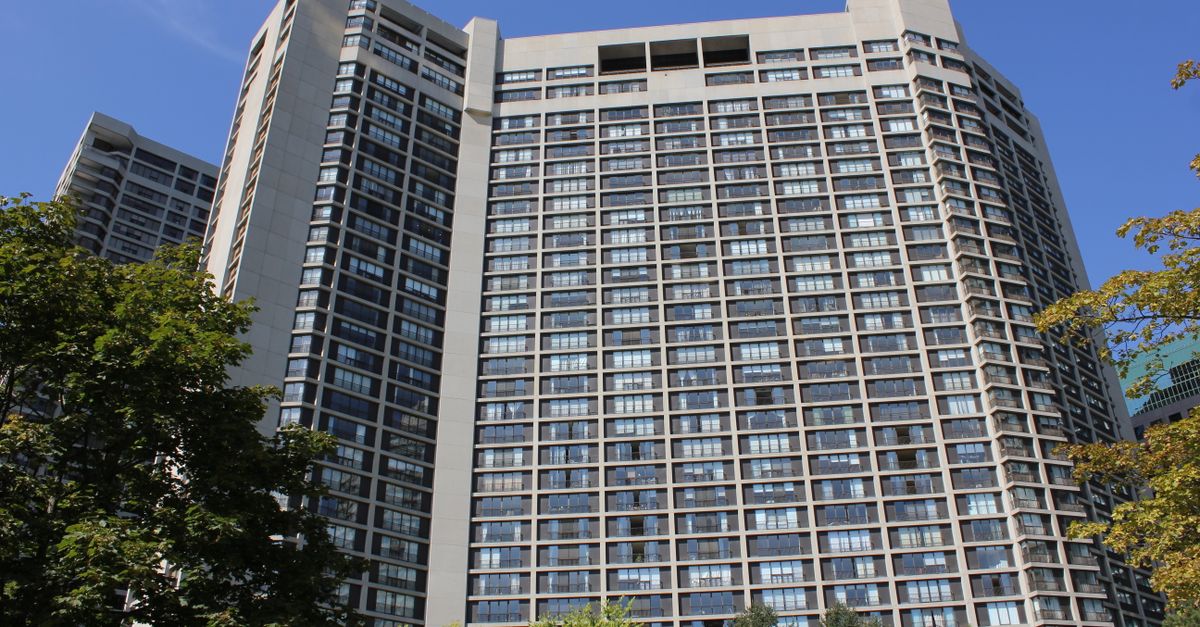
North York is where Toronto's affordability spectrum splits in two. Along the Yonge-Sheppard corridor, glass condo towers draw first-time buyers and investors. A few blocks east or west, the freehold streets of Willowdale, Newtonbrook, and Bayview Village hold detached homes that trade like move-up trophies. Two markets, two financing problems, one set of postal codes, and a single answer to "how much do I pay you for advice": zero, because the funding lender covers the agent's fee on standard residential deals.
If you are buying, renewing, or refinancing in North York in 2026, the question that actually matters is not "which bank" but "which lender for this file." That is what an independent mortgage agent in North York does: route your specific situation, condo or freehold, T4 or self-employed, newcomer or established, to the lender most likely to fund it on the best terms, from a panel of 50-plus banks, credit unions, monolines, and alternative lenders. Pair this guide with our mortgage agent versus bank comparison for the full agent-channel breakdown.
Short answer
An independent mortgage agent in North York Toronto routes your file to the right lender from a panel of 50+ banks, credit unions, monolines, and alternative lenders. Different lenders may offer different rates and conditions for similar products; on a $750,000 mortgage, each 0.10% of rate is about $750 of interest in the first year. The agent's fee is paid by the funding lender, so the service is at zero direct cost on standard residential deals.
Mortgage broker vs mortgage agent in North York: what is the difference?
Most North York homebuyers search for a "mortgage broker" but work with a "mortgage agent." The terminology is not interchangeable under Ontario's FSRA licensing framework, but in everyday use they mean the same thing: an independent licensed professional who shops your mortgage across multiple lenders rather than working for one institution.
In Ontario, FSRA licenses Mortgage Agents at Level 1 and Level 2, as well as Mortgage Brokers:
- Mortgage Agent Level 1 (Jenny's licence, FSRA #M22002086): may deal with financial institutions and lenders approved under the National Housing Act. Some alternative lenders fall within that permitted scope. Private mortgages must be handled by a Mortgage Agent Level 2 or Mortgage Broker. Cannot supervise other agents.
- Mortgage Agent Level 2: may also deal with other lenders, including private lenders.
- Mortgage Broker: may deal with all mortgage lenders and may supervise agents within a registered brokerage.
These licence classes may compare many of the same institutional lenders, but their permitted lender scope is not identical. When you see "mortgage broker North York" in a Google search, confirm the professional's exact FSRA designation and that it fits the lender type required for your file.
The other important contrast is an independent FSRA-licensed professional versus a bank employee. A bank mortgage specialist offers one institution's products. A Mortgage Agent Level 1 may compare options across the financial institutions and National Housing Act-approved lenders permitted under that licence.
| Dimension | Mortgage Agent / Broker | Bank Mortgage Specialist |
|---|---|---|
| Who they work for | You (the borrower) | The bank |
| Lender access | 50+ banks, credit unions, monolines, B-lenders | One institution's product line |
| Fee to borrower | Zero on standard residential deals (lender pays) | No direct fee (bank profit is built into rate) |
| Self-employed / newcomer | Can route to specialist lenders for complex files | Bank underwriting rules only, often a decline |
| Regulatory body | FSRA (Ontario) | OSFI (federal, via employer bank) |
North York 2026 market: prices by corridor
Per Toronto Regional Real Estate Board (TRREB) data through early 2026, North York price ranges vary sharply by sub-market:
- Yonge-Sheppard and Yonge-Finch condos: $580K to $850K for one-bed to two-bed units, the entry point for most first-time buyers and investors.
- Willowdale detached: $1.8M to $3.5M depending on lot size and condition, with builder-renovated homes at the top of that band.
- Newtonbrook and Bayview Village detached: $1.6M to $2.8M, popular with move-up and multi-generational families.
- Don Mills mid-rise and townhomes: $700K to $1.2M, a middle tier between condo and freehold.
The split matters for financing. A $700,000 condo purchase with 20% down needs roughly $110,000 in household income to clear the stress test. A $2,000,000 Willowdale detached needs closer to $330,000. North York Centre is also a genuine employment hub for finance, technology, and healthcare, which means a large share of local buyers carry self-employed or contract income that banks underwrite conservatively.
The framework: what North York buyers actually need
Run YOUR numbers
Model your North York mortgage at current rates.
Open the mortgage payment calculatorNorth York buyers fall into four broad groups, each with file complexity the Big-Five branches handle awkwardly.
- Condo first-time buyers along the Yonge corridor, stacking FHSA and RRSP Home Buyers' Plan funds, facing tighter qualifying ratios because condo maintenance fees count against the TDS ratio.
- Freehold move-up buyers in Willowdale and Bayview Village, managing the timing between selling one property and closing on the next.
- Newcomer buyers from North York's large Korean, Persian, Chinese, and South Asian communities, often with strong income but thin Canadian credit history.
- Self-employed professionals whose income appears on corporate returns rather than T4 slips.
In plain English, what an independent mortgage agent does is read your full file, pick the lender most likely to approve at the best terms, and negotiate rate without you needing to play one bank against another. The catch: most North York buyers do not realize the alternative exists until they have already accepted a sub-optimal offer or, worse, a decline.
The agent-versus-bank decision in North York
When you visit a bank branch for a mortgage, the advisor works for that bank. They have one set of products and one set of underwriting rules. If your file does not fit, you are declined, and you may never learn what alternatives existed. A mortgage agent shops the same file across the full lender panel at once.
The Financial Consumer Agency of Canada advises talking to several lenders, because different lenders may have different interest rates and conditions for similar products. As an illustration only, here is what a rate difference means in first-year interest on a $750,000 North York mortgage; the amount is less in later years as the balance is paid down:
- 0.20% delta: roughly $1,500 of first-year interest.
- 0.40% delta: roughly $3,000 first-year.
- 0.60% delta: roughly $4,500 first-year.
Monoline lenders consistently price 0.10% to 0.30% below Big-Five posted rates because they carry no branch-network overhead. But the rate gap is only half the story. On a newcomer file or a self-employed file, the lender match determines whether you are approved at all, and a bank cannot refer you to a competitor.
What 50-plus lenders means for your file
The Canadian residential mortgage market has four broad lender tiers. Each has its own sweet spot.
| Tier | Examples | Best fit for North York files | Typical rate position (May 2026) |
|---|---|---|---|
| Big-Five banks | RBC, TD, Scotiabank, BMO, CIBC | Prime files, clean T4 income, simple structure | Posted-rate-discount; often 0.20% to 0.40% above market |
| Credit unions | Meridian, DUCA, Alterna | Community-focused buyers, sometimes flexible underwriting | Competitive with banks; slower service |
| Monoline lenders | MCAP, First National, CMLS, Equitable Bank | Best rates on prime files; flexible on self-employed and condo investor files | Often 0.20% to 0.40% below Big-Five |
| Alternative ("B") lenders | Home Trust, Equitable Bank (B side), Haventree | Newcomer files with thin Canadian credit, recovering credit | 1.5% to 3% above prime files |
Tier positioning is illustrative, not personalized. Actual rate access depends on your file's underwriting strength, insurance status, and loan-to-value.
Per FSRA, a Mortgage Agent Level 1, Jenny's licence class, may deal with financial institutions and lenders approved under the National Housing Act. Some alternative lenders fall within that permitted scope; private mortgages must be handled by a Mortgage Agent Level 2 or Mortgage Broker. In most standard residential transactions the funding lender pays the agent's fee, so you receive broad rate shopping at no direct cost.
Common North York scenarios
The Yonge-corridor condo buyer
$580K to $850K range, usually a first-time buyer. Down payment is typically a stacked FHSA and RRSP Home Buyers' Plan combination (up to $100,000 single, $200,000 couple). The common challenge is the tighter qualifying ratio: condo maintenance fees count against your TDS, so the same income qualifies for less on a condo than on a freehold. Monoline lenders with dedicated condo programs are often the better fit. See our down payment in Canada guide for the FHSA-plus-HBP playbook.
The Willowdale move-up buyer
Selling a North York condo or a smaller GTA property and moving to a $1.8M-plus detached. The common challenge is timing the bridge between the maturity of the current mortgage and the closing of the new home. Our Ontario bridge financing playbook covers the rate math and the alternatives like portable mortgages and extended closings.
The newcomer professional
Arrived in Canada in the last two to four years, strong income, thin Canadian credit history. Several banks (HSBC, BMO, RBC) and monolines run specific newcomer programs that underwrite around the limited credit file. Most branches default to "thin file" pricing instead, which can add 0.30% to 0.80% to the rate. The right routing matters more here than almost anywhere else.
The self-employed business owner
Income appears on corporate tax returns rather than T4 slips. Banks often apply rigid two-year-average rules that under-represent the real financial strength of the business. Lenders who specialize in self-employed files use statement-of-earnings and notice-of-assessment review processes that capture a more accurate picture. Walk through the structural options in our self-employed mortgage path in Canada.
The investment-property buyer
North York condos near the Sheppard subway line and the Yonge corridor see steady rental demand. Investment-property mortgages require a larger down payment (20% to 35% depending on the lender and insurance) and apply stricter rental income offset rules. Big-Five guidelines are typically more restrictive than monoline guidelines for investor files, so lender selection materially changes what you can qualify for.
"Many of my North York clients are newcomers or self-employed professionals who were told by their bank they did not qualify. The bank was not wrong about its own rules. It was just the wrong lender for that file. With the right lender and the right file presentation, the same borrower qualifies. Getting a second opinion before you accept a decline or a poor offer costs nothing."
Jenny Tate, Mortgage Agent Level 1, FSRA #M22002086
The renewal angle: why North York homeowners overpay
If you take no action, your mortgage may renew automatically, and the Financial Consumer Agency of Canada notes that this means you may not get the best interest rate and conditions. A renewal letter shows one offer from your current lender, and you may qualify for a discounted rate lower than the one it quotes.
The mechanics most North York homeowners do not know:
- You can switch lenders at maturity without paying any penalty, because the mortgage has matured, not been broken.
- Per OSFI, a straight switch at renewal does not trigger the federal stress test as long as you do not increase the balance or amortization.
- The standard rate-hold window is 120 days before maturity. Lock the rate, then negotiate from a position of leverage.
The full mechanics are in our refinance vs renewal decision guide.
North York mortgage rates 2026: what you are actually looking at
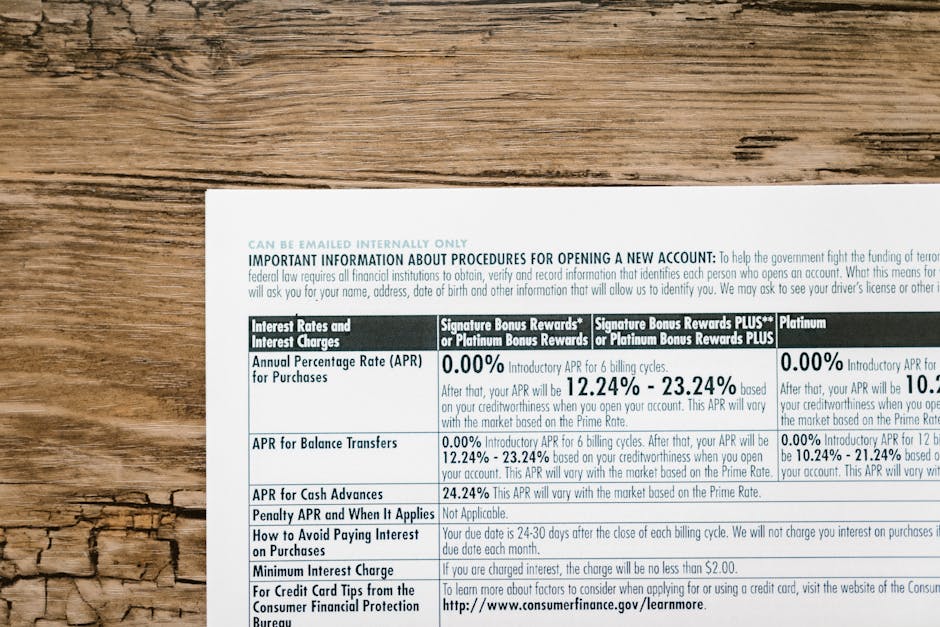
Rate is the number borrowers focus on, but context matters as much as the number itself. Here is the rate landscape in North York in May 2026.
The Bank of Canada policy rate is 2.25% as of March 18, 2026. Prime rate is approximately 4.45%. From there, lenders build product rates based on bond yields (for fixed), prime (for variable), and their own risk pricing.
Insured vs uninsured, the most important North York distinction
Insured mortgages (down payment under 20%, CMHC or Sagen coverage) get the best rates in Canada because the lender carries no default risk. For North York buyers entering the Yonge corridor condo market with 5%-19.99% down, insured rates through monolines are currently in the high 4% range for 5-year fixed.
Uninsured mortgages (down payment 20%+) face a small rate premium, typically 0.10%-0.25% above insured, because the lender takes on the default risk. Willowdale freehold buyers with substantial down payments are in this category.
5-year fixed vs variable in North York 2026
Most North York buyers in 2026 are choosing 5-year fixed over variable. The Bank of Canada cut rates several times through 2024-2025, but with prime at 4.45%, variable-rate mortgages (typically prime minus 0.40% to 0.80%) run 3.65%-4.05%. 5-year fixed rates through monolines are in the 4.69%-5.09% range for insured files.
Variable is cheaper today, but borrowers choosing variable should have the cash flow to handle prime increasing by 1.5%-2% without financial strain. North York's high-price-point freehold market means the dollar impact of a rate change is large. A 1% rate increase on an $800,000 mortgage adds approximately $8,000 per year in interest.
North York condo vs freehold financing difference
Condo financing has one extra complexity: the CMHC maintenance-fee qualifying factor. The full condo maintenance fee counts against your Total Debt Service ratio, which reduces your qualifying purchase price by roughly $50,000-$80,000 per $500/month in condo fees compared to an equivalent-payment freehold. This is why Yonge-corridor condo buyers in North York often find they qualify for less than the TRREB average suggests at their income level.
Second mortgage and private mortgage in North York
Not every North York borrower needs a first-mortgage solution. Homeowners with substantial equity sometimes need to access that equity without refinancing or disturbing a first mortgage that still has several years at a low fixed rate.
Second mortgage in North York
A second mortgage is a separate loan registered behind the first, allowing you to access equity without breaking the first mortgage. For North York homeowners with $600K+ in equity in their Willowdale or Newtonbrook property, a second mortgage to fund a major renovation or consolidate consumer debt is often cheaper than breaking the first (with its IRD penalty) and refinancing.
North York detached homes with 40%-60% equity are the ideal second-mortgage profile. Most lenders cap combined lending at 80% of the home's appraised value. The full mechanics are in our second mortgage Toronto guide.
Private mortgage in North York
Private mortgages in North York are typically used as bridges: a recent credit event (consumer proposal, job change, divorce), a self-employed borrower who needs time to build a 2-year income history, or an investor who has hit their bank's portfolio cap. Private lenders focus on equity and exit strategy rather than credit score. First-position private rates in Toronto/North York run 7%-11%, with terms of 1-2 years and a clear plan to refinance into a prime lender at maturity.
For the full private lending framework including MIC vs individual lender options and fee disclosure rules, see our private mortgage lenders Toronto guide.
Pre-construction condos in North York: the closing-day mortgage problem
North York is one of the most active pre-construction markets in Canada. The Yonge-Sheppard corridor, Bayview Village mid-rises, and the emerging Don Mills and Eglinton area all have projects with 2-to-4-year completion timelines. That gap creates a financing problem most buyers do not fully grasp at signing.
When you sign a pre-construction agreement in North York today, you are paying a deposit (typically 15%-25% of the purchase price in staged installments). The mortgage itself is arranged fresh at closing, meaning the rate environment at occupancy in 2027 or 2028 is completely separate from today's rates. There is no rate lock at signing.
Three mechanics specific to pre-construction North York files:
- Occupancy fee period: After the developer grants occupancy but before the building is registered, you pay an occupancy fee to the developer (not a mortgage). This covers interest on the purchase price, condo fees, and property tax. It is not a mortgage payment and does not build equity. This period can run 3-24 months.
- Assignment sales: If you decide to sell your agreement before closing, most North York developers require consent and may charge a fee. The buyer taking over the agreement also needs a lender who accepts assignment financing, which is not every institution. Routing this file correctly requires knowing which monolines and alternative lenders have active assignment programs.
- Condo fee TDS at registration: At the time you arrange the actual mortgage (registration, not occupancy), the condo maintenance fee count against your TDS ratio. If the building's fees have increased since signing (common in newer North York towers), your qualifying purchase price effectively drops. Buyers who were pre-approved based on today's fees sometimes face a shortfall at registration.
If you signed a pre-construction agreement in North York and closing is within 18 months, starting the mortgage conversation now rather than at the 90-day mark gives you time to work through any qualifying issues before they become urgent. Most lenders will issue a rate hold 120 days out; some programs allow 150-180 days for verified pre-construction files.
How the process works, and what to do next
Working with a North York mortgage agent runs through six steps: a free 15-minute discovery call, document collection, pre-approval or a 120-day rate hold, lender matching across the full panel, the approval and commitment letter, and finally the lawyer and funding stage. Total timeline is typically two to four weeks from application to funding, with pre-approvals issued within days.
Jenny Tate is a licensed Mortgage Agent Level 1 (FSRA #M22002086) working under Tango Financial Mortgage (ON) Corporation (FSRA #13691). She holds an MBA in Finance and a Lean Six Sigma Black Belt, and has earned 50+ five-star client reviews across North York, Toronto, Vaughan, Thornhill, and the broader GTA. Her practice covers purchases, renewals, refinancing, home-equity access, and investment-property financing.
Here is what I would want my sister to know before approaching any lender in North York: the bank your realtor recommends is usually the bank with the best referral program, not the best rate for your specific file. A newcomer professional, a self-employed borrower, and a pre-construction condo buyer each need a different lender, and none of those optimal lenders is the one that sends the most branded gift bags at open houses. The file routing matters more than the brand.
Whether you are buying your first condo on the Yonge corridor, renewing a mortgage in Willowdale, or accessing equity from a Bayview Village detached, the first step is a free 15-minute discovery call with a Toronto mortgage agent serving North York. Book directly at calendly.com/jtmortgages/discovery-call-1 or call (647) 642-7249.
Frequently Asked Questions

How do I find a mortgage agent in North York?expand_more
Most North York homebuyers find their mortgage agent through a referral from their realtor, accountant, or someone who recently went through the process. Look for a licensed FSRA Mortgage Agent (FSRA #M22002086 in Jenny Tate's case) operating under a registered brokerage. A free 15-minute discovery call lets you assess fit before committing.
Is using a mortgage agent in North York free?expand_more
Yes, for standard residential transactions. The funding lender pays the agent a finder's fee on closing, so the borrower pays nothing for advice, application work, or rate shopping. Private lender deals may carry a fee that is always disclosed in writing in advance under FSRA standards of practice.
What's the difference between a mortgage agent and a mortgage broker in Ontario?expand_more
Both are licensed by FSRA, but their permitted lender scope differs. A Mortgage Agent Level 1 may deal with financial institutions and lenders approved under the National Housing Act. Private mortgages must be handled by a Mortgage Agent Level 2 or Mortgage Broker. A Mortgage Broker may also supervise agents.
Do I need to live in North York to work with a North York mortgage agent?expand_more
No. Most mortgage agent work in 2026 is fully remote (phone, email, video call, and a secure document portal). You can live anywhere in the GTA and still work with a North York agent. The location matters more for local market expertise than for physical meetings.
How many lenders does a mortgage agent typically work with?expand_more
Mortgage agents may have access to major banks, credit unions, monoline lenders, and eligible alternative lenders. A Mortgage Agent Level 1 may deal only with financial institutions and lenders approved under the National Housing Act; private mortgages must be handled by a Mortgage Agent Level 2 or Mortgage Broker.
How long does the mortgage process take in North York?expand_more
Typical conditional approval lands within 2-5 business days of full document submission. Final approval comes once the appraisal and title work are complete, usually 7-14 days for a purchase. Refinances and renewals can move faster because there is no appraisal coordination.
What documents do I need for a mortgage application in North York?expand_more
Standard list: 2 most recent pay stubs, 2 years of T4s or T1 General returns (for self-employed), employment letter, 90 days of bank statements showing the down payment, photo ID, and the purchase agreement if applicable. Self-employed adds business financials and CRA Statements of Account.
Can I get a mortgage with bad credit in North York?expand_more
Yes, through alternative or private lenders that focus on equity, recent income stability, and exit strategy rather than historical credit. Rates run roughly 1.50%-3.00% above prime-lender rates. The structure is usually a 1-year term designed to repair credit and refinance into a prime lender at maturity.
What mortgage rates are available in North York in 2026?expand_more
With Bank of Canada prime at 4.45% (as of March 2026), insured 5-year fixed rates through monoline lenders are in the high 4% range. Uninsured 5-year fixed rates (20%+ down payment) carry a small premium, typically 4.79%-5.09%. Variable rates are prime minus 0.40%-0.80%, putting them at 3.65%-4.05%. Different lenders may have different rates and conditions for similar products, so compare written offers.
What is the difference between a mortgage broker and mortgage agent in North York?expand_more
In Ontario, mortgage agents and brokers are FSRA-licensed professionals, but their permitted lender scope differs. A Mortgage Agent Level 1 may deal with financial institutions and lenders approved under the National Housing Act. Private mortgages must be handled by a Mortgage Agent Level 2 or Mortgage Broker. When you search "mortgage broker North York," confirm the licence class fits the lender required for your file.
Can a North York mortgage agent help with a condo vs freehold purchase?expand_more
Yes, both types have distinct qualifying challenges. Condo maintenance fees reduce qualifying purchase price by counting against the TDS ratio, which means the same income qualifies for less on a condo than on a freehold. Willowdale and Bayview Village freehold buyers face different challenges around uninsured qualifying thresholds. An agent routes each file to the lender with the most favourable underwriting for that specific product type.
Get expert mortgage advice for North York and Toronto.
Book a free 15-minute call with Jenny. She'll review your situation and show you what 50+ lenders can offer -- at no cost to you.

Jenny Tate
Mortgage Agent Level 1 · FSRA #M22002086 · MBA in Finance · Lean Six Sigma Black Belt
Jenny Tate is a licensed mortgage agent serving North York, Toronto, Vaughan, Thornhill, and the GTA. With access to 50+ lenders, 50+ five-star reviews, and an MBA in Finance, she builds mortgage strategies that serve your long-term goals -- not a bank's sales targets. Licensed with Tango Financial Mortgage (ON) Corporation (FSRA #13691).