First-Time Home Buyer Guide Toronto: Everything You Need to Know in 2026
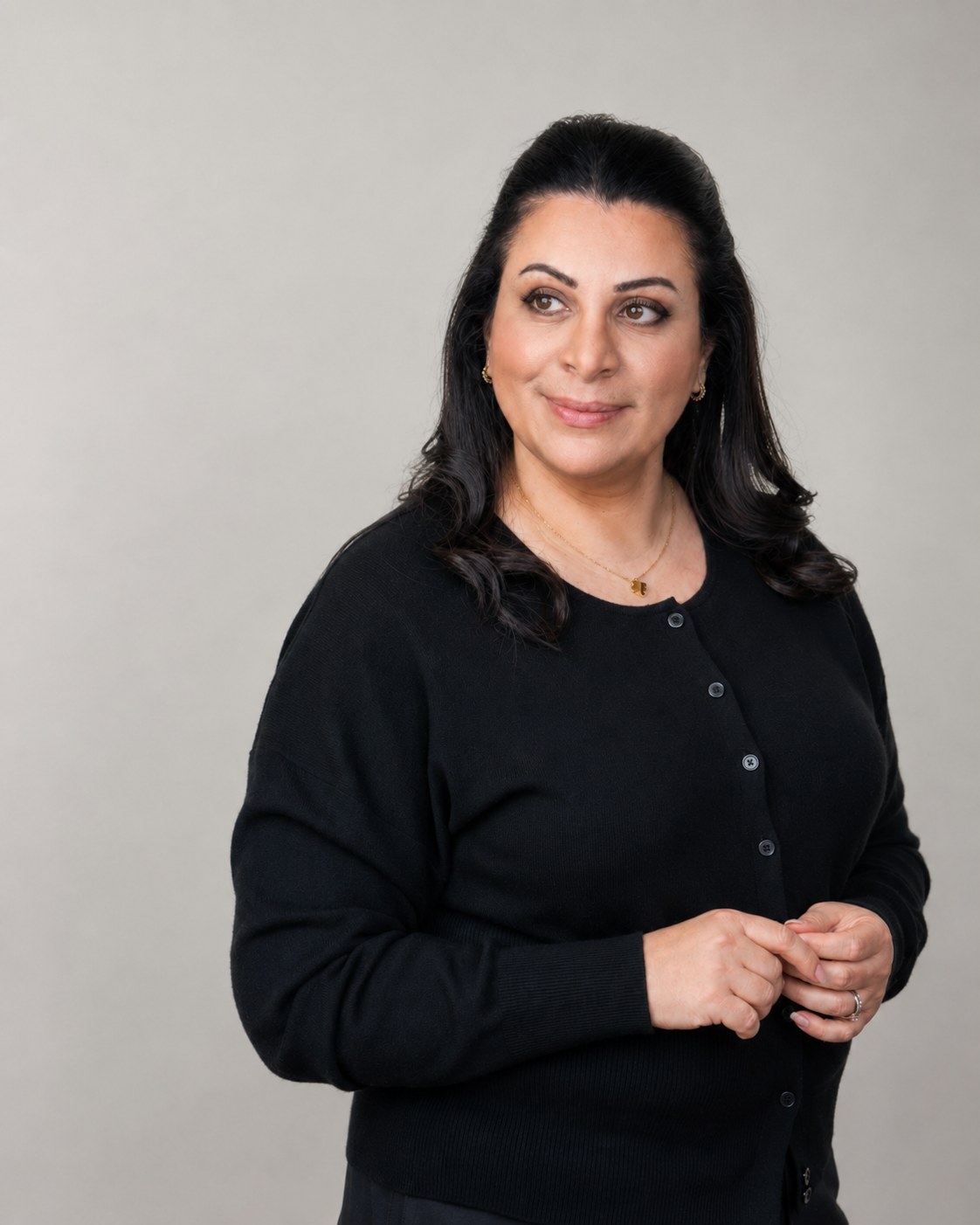 By Jenny Tate
Buying your first home in Toronto is one of the most exciting, and most overwhelming, financial decisions you will make. As a first time home buyer in Toronto, you're entering one of Canada's most expensive housing markets, navigating a mortgage qualification system that has become increasingly complex, and trying to time a market that defies easy prediction. This guide cuts through the noise and walks you through everything you need to know to buy your first home in Toronto in 2026, step by step.
Quick answer: how to buy your first home in Toronto in 2026
First-time buyers in Toronto need to clear seven gates: (1) understand your real qualifying number under the federal stress test, (2) save the minimum down payment (5% on the first $500K, 10% on the portion to $1.5M, 20% above), (3) open and fund an FHSA, (4) get a proper mortgage pre-approval before house-hunting, (5) understand the stress test, (6) budget 1.5%-4% of purchase price for closing costs, and (7) choose mortgage structure carefully. Combined first-time-buyer rebates in Toronto can be worth up to $8,475 in land transfer tax savings plus tax-sheltered down payment help via FHSA + RRSP HBP.
Step 1: Understand What You Can Actually Afford
Before you start scrolling through listings on Realtor.ca, you need an honest picture of your purchasing power. A quick way to get a ballpark is to estimate your monthly mortgage payments at a few purchase prices, but the real affordability calculation in Canada is governed by two ratios that lenders use:
- Gross Debt Service (GDS) ratio: Your mortgage payment, property taxes, heating, and 50% of condo fees cannot exceed 39% of your gross monthly income.
- Total Debt Service (TDS) ratio: All of the above plus all other debt payments (car loans, student loans, credit cards) cannot exceed 44% of gross monthly income.
These numbers are calculated using your stress-tested rate, not your actual mortgage rate. This is where many first-time buyers in Toronto are surprised, you may qualify at your actual rate, but not at the stress test rate (more on this below).
Step 2: Save Your Down Payment (and Understand the Rules)
Run YOUR numbers
Model your first home's mortgage payment before you start house-hunting.
Open the Ontario mortgage calculatorIn Canada, the minimum down payment depends on the purchase price:
- Under $500,000: 5% minimum
- $500,001 to $1,499,999: 5% on the first $500,000 + 10% on the remainder
- $1,500,000 and over: 20% minimum (no mortgage default insurance available)
In Toronto, a significant portion of available properties are in the $700,000 to $900,000 range. On an $800,000 property, the minimum down payment would be $55,000 ($25,000 on the first $500K + $30,000 on the remaining $300K). This is a meaningful savings target for most first-time buyers.
Down Payment Impact: 5% vs 10% vs 20% on an $800K Toronto Home
The down payment percentage you choose affects three things: cash needed at closing, monthly payment, and total interest paid over the life of the mortgage. Here's how the three common scenarios compare on a typical $800K Toronto purchase:
| Scenario | Minimum (≈6.9%) | 10% Down | 20% Down |
|---|---|---|---|
| Cash needed at closing | $55,000 | $80,000 | $160,000 |
| Mortgage before insurance | $745,000 | $720,000 | $640,000 |
| CMHC insurance premium | ~4.00% (~$29,800) | ~3.10% (~$22,320) | $0 (uninsured) |
| Final mortgage | ~$774,800 | ~$742,320 | $640,000 |
| Insured rate available? | Yes (typically lower posted rate) | Yes | No (uninsured rate) |
| 30-year amortization eligible? | Yes (any FTB, <$1.5M) | Yes (any FTB, <$1.5M) | Yes |
Numbers are illustrative ranges, not quotes. CMHC premium depends on exact loan-to-value ratio. Run your specific numbers in the free calculator.
Step 3: Use the First Home Savings Account (FHSA)
The FHSA is the most powerful tax tool available to first-time home buyers in Canada. Introduced in 2023, it allows you to contribute up to $8,000 per year to a maximum of $40,000 lifetime, with contributions being tax-deductible (like an RRSP) and withdrawals being tax-free when used for a qualifying first home purchase (like a TFSA).
If you have not opened an FHSA yet, do it today, even if you're a year away from buying. The contribution room accumulates from the year you open the account, so opening it now means you can contribute up to $16,000 by the time you buy if you open in 2025 and buy in 2026.
Step 4: Get Pre-Approved Before You Make an Offer

Mortgage pre-approval for first-time buyers in Toronto is not optional, it is essential. In a competitive market, sellers often won't even consider offers without a pre-approval letter. More importantly, the pre-approval process will reveal any issues with your income documentation, credit, or debt levels before you find a home you love.
A pre-approval from a mortgage agent in Toronto gives you access to rates from multiple lenders and a commitment letter that holds the rate for 90 to 120 days. This protects you if rates rise while you're searching. Read our full guide to mortgage pre-approval in Toronto for the documentation list and what can void your approval before closing.
Step 5: Understand the Mortgage Stress Test
All federally regulated mortgage lenders in Canada are required to stress test your mortgage application. Even if your actual mortgage rate is 4.5%, you will be qualified at the higher of 5.25% or your contract rate plus 2%. As of 2026, the qualifying rate for most borrowers is approximately 6.5% to 7%.
This means that if you qualify at a $600,000 purchase price at the stress test rate, you're likely able to actually afford a $700,000+ home based on your actual payment. The stress test is designed to ensure you can handle rate increases, but it also reduces purchasing power by roughly 20%.
Step 6: Budget for Closing Costs
First-time buyers in Toronto are often blindsided by closing costs. Budget for 1.5% to 4% of the purchase price on top of your down payment:
- Ontario Land Transfer Tax (LTT): Calculated on a tiered basis. On a $750,000 purchase, approximately $11,475. First-time buyers receive a rebate of up to $4,000.
- Toronto Land Transfer Tax (TLTT): Toronto has an additional municipal land transfer tax, also tiered. On a $750,000 purchase, approximately $11,275. First-time buyers receive a rebate of up to $4,475 on the TLTT.
- Legal fees: $1,500 to $2,500 for a real estate lawyer
- Home inspection: $400 to $600
- Title insurance: Approximately $250 to $400
- Adjustments: Property tax and utility prepayments by the seller
On a $750,000 purchase in Toronto, a first-time buyer might face $15,000 to $22,000 in closing costs after rebates. This must be in addition to your down payment on closing day.
Step 7: Choose the Right Mortgage Structure from the Start
Your first mortgage sets the foundation for your financial life as a homeowner. The decisions you make now, term length, amortization, fixed vs variable, prepayment privileges, will affect your finances for years. At jenny.mortgage, this is called mortgage structuring, and it's the most important part of the process.
A few key decisions:
- 25-year vs 30-year amortization: Since December 15, 2024, first-time buyers can access 30-year insured amortizations on any home under $1.5M (resale or new), and any buyer can use 30 years on a newly built home under $1.5M. This reduces monthly payments meaningfully but adds roughly $117,000 in lifetime interest on a $700K mortgage at current rates. The full mechanics, eligibility tests, and worked numbers are in our 30-year amortization Canada 2026 guide.
- Prepayment privileges: Look for the ability to increase your payment and make lump-sum contributions annually. Even small prepayments can shave years off your amortization.
- Portability: If you plan to move within your term, make sure your mortgage is portable, this lets you transfer it to a new property without penalty.
First-Time Home Buyer Incentives and Programs in 2026
Be aware of programs that may be available to you:
- First Home Savings Account (FHSA), as described above
- RRSP First Home Buyers' Plan, up to $60,000 per person, repaid over 15 years
- Ontario Land Transfer Tax Rebate, up to $4,000
- Toronto First Home Transfer Tax Rebate, up to $4,475
- GST/HST New Housing Rebate, applicable if buying a newly built home
Buying your first home in Toronto is absolutely achievable in 2026, but it requires preparation, realistic expectations, and the right professional team. Working with a licensed mortgage agent in Toronto gives you access to the full market, unbiased advice, and someone who acts in your interest rather than the bank's. The consultation is free.
First-Time Home Buyer FAQ
What is the minimum down payment for a Toronto home in 2026?expand_more
5% on the first $500,000 of the purchase price, 10% on the portion between $500,000 and $1,500,000, and 20% on any portion above $1,500,000. On an $800,000 Toronto home, the minimum down payment is $55,000.
Can first-time buyers in Toronto qualify for a home over $1 million?expand_more
Yes, but the rules differ. Under $1.5M, you can use a tiered minimum down payment with default insurance. At $1.5M and above, the minimum down payment is 20% and the mortgage must be uninsured, which limits which lenders are competitive.
What is the FHSA and should first-time buyers use one?expand_more
The First Home Savings Account allows up to $8,000/year in contributions to a $40,000 lifetime maximum. Contributions are tax-deductible like an RRSP, and withdrawals are tax-free when used for a first home, the most powerful tax tool available to first-time buyers in Canada.
How much should first-time buyers budget for closing costs in Toronto?expand_more
Plan for 1.5% to 4% of the purchase price on top of the down payment. On a $750,000 Toronto home, closing costs typically run $15,000-$22,000 after first-time buyer rebates.
What is the first-time buyer Land Transfer Tax rebate in Toronto?expand_more
Ontario offers up to $4,000 in LTT rebate for first-time buyers, and Toronto adds up to $4,475 in municipal LTT rebate. Combined, first-time buyers in Toronto save up to $8,475 in land transfer taxes.
Do I need a pre-approval before house-hunting in Toronto?expand_more
Effectively yes. In Toronto's competitive market, sellers and their agents will not seriously consider offers without a pre-approval letter. See our guide to mortgage pre-approval in Toronto.
What credit score do first-time buyers in Toronto need?expand_more
Most prime lenders require 680+ alongside strong income. The 600-680 range is workable with alternative lenders at a 0.5%-1.5% rate premium. Below 600, options are mostly private lenders structured as a 1-year term with a credit-repair plan.
Can I combine the FHSA with the RRSP Home Buyers' Plan?expand_more
Yes. The two programs stack. A couple can use $40,000 from each FHSA ($80,000) plus $60,000 from each RRSP HBP ($120,000), for over $200,000 in tax-sheltered down payment savings, repaid over 15 years for the RRSP portion only.
What is the difference between insured and uninsured mortgages?expand_more
Mortgages with less than 20% down require default insurance from CMHC, Sagen, or Canada Guaranty. The premium runs roughly 2.80%-4.00% of the mortgage amount and is added to the loan. With 20%+ down, the mortgage is uninsured and no premium applies. Insured mortgages typically carry slightly lower posted rates because the lender's risk is reduced.
How long does the home buying process take for a first-time buyer in Toronto?expand_more
From pre-approval to closing typically runs 60 to 120 days, depending on how quickly you find a property. Pre-approval itself takes 24-48 hours with clean documentation. Closing on an accepted offer is usually 30-60 days.
Related First-Time Buyer Guides
- Mortgage Pre-Approval Toronto, what it actually means, what it doesn't guarantee, and how to use it.
- Down Payment Requirements Canada, minimum rules, FHSA, RRSP HBP, and gift down payments.
- How Much House Can I Afford in Ontario, the GDS/TDS math behind your qualifying number.
- 2026 Mortgage Stress Test, qualifying rate, who it applies to, and how to maximize your number.
- Canada Mortgage Rates 2026, current ranges and what to expect.
- Mortgage Calculator, model monthly payments and total interest.
- Mortgage Broker Toronto, independent help across 50+ lenders.
Ready to start your home buying journey?
Book a free 15-minute call with Jenny to understand your purchasing power and get a pre-approval plan in place.
Jenny Tate
Mortgage Agent Level 1 · FSRA #M22002086 · MBA in Finance · Lean Six Sigma Black Belt
Jenny Tate is a licensed mortgage agent serving Toronto, Burlington, and the Greater Toronto Area. She specializes in guiding first-time buyers through the entire home purchase process. Licensed with Tango Financial Inc. (FSRA #13691).