FHSA vs RRSP Home Buyers' Plan: Which Should a First-Time Buyer in Canada Use?

The short answer
You can use both for the same home. One is the FHSA. The other is the RRSP program that lets you borrow from your own RRSP (the Home Buyers' Plan, or HBP). Your lender doesn't care which one saves more tax. It wants to see that the down payment is real and where it came from. The big difference comes after you move in. FHSA money never has to be paid back. RRSP money does, over up to 15 years. Take it out in 2026 and payback starts in 2031, the year a five-year mortgage started in 2026 comes up for renewal.
Key takeaways
- Paying your RRSP back comes on top of the mortgage payment. In the couple example below, that's about $328 a month, starting in 2031.
- You need a signed purchase agreement before you can take money out of either one. At pre-approval, it's still in the accounts.
- Money you put into an RRSP in the 89 days before an HBP withdrawal can lose its tax deduction. The FHSA has no waiting time.
Two things surprise first-time buyers. You don't have to pick one account. And a mortgage pre-approval isn't the signed agreement you need before you can take a dollar out of your RRSP. Below is the mortgage side: what the lender asks for, what has to happen first, and what the HBP costs you later. For how much you need, see the minimum down payment rules in Canada.
What will the lender ask to see?
Canada's financial consumer agency (FCAC) says that for a pre-approval you'll need "proof you can pay for the down payment and closing costs". It adds that the lender may ask for "recent financial statements from bank accounts or investments."
For FHSA and RRSP money, that means:
- Your statements are the proof. You can't take the money out until you've signed an agreement to buy or build. At pre-approval the money stays where it is. Ask your lender which statements it wants and how far back.
- Keep the paper trail. Keep the form you filled in: RC725 (the FHSA withdrawal request) or T1036 (the HBP withdrawal request). Keep the statements that show the money move.
- Plan the deposit on its own. You can only withdraw after you sign. Before you count on that money for a deposit, ask the bank or company that holds your account how long a withdrawal takes.
A tax-free withdrawal says nothing about whether you'll be approved. Your income, your debts and the mortgage stress test decide that. The Ontario affordability guide shows the math.
The order things have to happen in
The limits are easy. The order is where people get caught:
- Offer. The money is still in your accounts.
- Signed agreement. Now you can ask for both withdrawals.
- Forms. RC725 goes to whoever holds your FHSA. T1036 goes to whoever holds your RRSP.
- Money arrives. Keep the statements that show it move.
- Closing. Take the money out no later than 30 days after you become the owner.
- HBP payback begins. 2031, if your first withdrawal is in 2026.
FHSA: sign first, then take the money out
Meet all of these and the withdrawal is tax-free (the CRA calls it a qualifying withdrawal). Miss one and it's taxed. The exact wording is on the CRA's FHSA page.
- A signed agreement to buy or build a home in Canada. The CRA's words are "a written agreement to buy or build a qualifying home." The closing date must be before October 1 of the year after you withdraw.
- The 30-day window. You can't have owned the home for more than 30 days when you withdraw.
- The first-time buyer test on the day you withdraw.
- Where you live. You live in Canada until you own the home, and plan to move in within a year.
One rule helps: there's "no minimum number of days" your money has to sit in an FHSA first. The catch: your first tax-free withdrawal starts a clock. The account has to be closed by December 31 of the next year, and money you put back in gets no tax deduction.
HBP: the 90-day rule and the other dates
- The signed agreement. You need it when you withdraw. A pre-approved mortgage doesn't count.
- The "90-day rule". The CRA's wording is the 89-day period before the withdrawal. Money you put into an RRSP in those 89 days is only deductible up to what's left in that RRSP after you withdraw. Put in $6,000, empty the plan within 89 days, and the $6,000 deduction is gone. Leave $6,000 in and you keep it.
- One window for withdrawals. Every HBP withdrawal has to be in the same calendar year as the first, or the January after.
- The deadline. You have to buy or build the home before October 1 of the year after your first withdrawal. If the deal falls through, see the rules for cancelling and returning the money.
- If you've used the HBP before. The old balance has to be zero at the start of the year you withdraw again.
Are you a "first-time buyer"? There are three tests
Each test looks back over this calendar year and the four before it, and asks who owned the home you lived in. (For the two withdrawal tests, the 30 days right before the withdrawal don't count.) What changes is whose ownership counts.
| Test | A home you owned | A home your spouse or partner owned, that you lived in |
|---|---|---|
| Opening an FHSA | Counts | Counts |
| Taking money out of an FHSA tax-free | Counts | Doesn't count |
| HBP withdrawal | Counts | Counts (current spouse or common-law partner) |
For couples, this is where plans go wrong. Say you moved into a home your partner owns. You generally can't open an FHSA. The CRA also lists overlooking a spouse's home ownership as a common HBP mistake. The HBP has two exceptions. One is for a person with a disability. The other is for someone living separate and apart from their spouse or common-law partner when they withdraw. They must have begun living apart that year or in the four years before. Run the test for each buyer and each account.
FHSA vs RRSP Home Buyers' Plan, side by side
| What you want to know | FHSA | RRSP Home Buyers' Plan |
|---|---|---|
| How much you can put in each year | $8,000 of new room a year, from the year you open your first FHSA | No limit of its own. Your normal RRSP limit applies |
| Lifetime limit | $40,000 per person, counting money moved in from an RRSP | $60,000 taken out, per person |
| Unused room | Up to $8,000 rolls into next year. Most in one year: $16,000. Room starts at $8,000 the year you open your first FHSA | Doesn't apply |
| Tax deduction when you put money in | Yes, this year or a later one. Not for RRSP-to-FHSA transfers | Normal RRSP deduction. Deposits in the last 89 days can lose it |
| Tax when you take money out | None, if it meets the rules. Otherwise taxed as income, with tax held back | None at the time, if you meet the rules. You now owe it back to your RRSP |
| Paying it back | Never | Up to 15 years. Miss a year and that amount is taxed as income |
| Deadline to buy or build | Before October 1 of the year after the withdrawal | Before October 1 of the year after the first withdrawal |
| If you don't buy | Move it to your RRSP or RRIF with no tax right away, or take it out as income, before the account's deadline | Nothing. The money never left your RRSP |
Each row is from the CRA pages listed under Sources, opened October 12, 2026.
Can you use both? What a couple can combine
The CRA lets you use both for the same home. The limits belong to each person, not to the household. Each buyer has their own $60,000 HBP limit and $40,000 FHSA lifetime limit, and passes the tests on their own. On paper, that's up to $120,000 from two RRSPs, plus whatever is in two FHSAs. In real life, what counts is what's in each account that day.
Hypothetical example, not a client result
A couple using two FHSAs and two RRSPs on an $800,000 purchase
Inputs: The home costs $800,000. They sign and take the money out in 2026. Both meet every FHSA and HBP rule. The investments neither grew nor shrank. Partner B put $6,000 into the RRSP 60 days before the withdrawal.
| Partner A | Partner B | Together | |
|---|---|---|---|
| Put into the FHSA | $8,000 a year for 4 years = $32,000 | $8,000 a year for 2 years = $16,000 | $48,000 |
| In the RRSP before the withdrawal | $45,000 | $20,000 | $65,000 |
| Taken out under the HBP | $45,000 | $14,000 | $59,000 |
| Total toward the down payment | $77,000 | $30,000 | $107,000 |
| First HBP payback year | 2031 | 2031 | |
| First year's payback (amount taken out / 15) | $3,000 | $933.33 | $3,933.33 a year, about $328 a month |
In plain words: Partner A takes everything: $32,000 from the FHSA and $45,000 from the RRSP. That's $77,000. Partner B takes the $16,000 FHSA but only $14,000 of the $20,000 RRSP. That's $30,000. Together, $107,000.
Why Partner B leaves $6,000 behind: B put that $6,000 in during the 89 days before the withdrawal. If B took all $20,000, the RRSP would be at zero and the $6,000 deduction would be lost. Taking $14,000 leaves $6,000 in the plan. That matches the recent deposit, so B keeps the deduction.
What it means for the mortgage: The smallest down payment allowed on $800,000 is $55,000. That's 5% of the first $500,000 plus 10% of the other $300,000. The couple has $107,000, which is 13.4% of the price. That's under 20%. FCAC says that with less than 20% down "you'll typically need to buy mortgage loan insurance." That's mortgage default insurance: you pay for it, and it protects the lender. Reaching 20% would take $160,000, another $53,000. Closing costs are extra.
Hypothetical. Your balances, whether you qualify, and the lender decide the real numbers.
Both rules are on the FCAC down payment page. For an insured mortgage, see the 30-year amortization rules.
After you move in: paying your RRSP back
Once you take FHSA money out, you're done. The HBP is different. What you took out is now money you owe your own RRSP.
- How long. You have up to 15 years to repay.
- When it starts. Normally, in the second year after your first withdrawal. A temporary break moves that to the fifth year. The CRA's main Home Buyers' Plan page says the break covers first withdrawals from January 1, 2026, to December 31, 2028. Withdraw in 2026 and payback starts in 2031.
- How much. Each year you owe at least what's left, divided by the years left.
- How you pay. Put the money into your RRSP in the year it's due, or in the first 60 days of the next year. Then tell the CRA which RRSP deposit is your repayment, on Schedule 7 of your tax return.
- If you miss a year. The amount you didn't pay back is taxed as income that year.
| Taken out under the HBP | First year's payback (amount / 15) | Per month (/ 12) |
|---|---|---|
| $14,000 (Partner B above) | $933.33 | about $78 |
| $45,000 (Partner A above) | $3,000 | $250 |
| $60,000 (the limit) | $4,000 | about $333 |
Put that monthly number next to your own payment from the Ontario mortgage payment calculator.
Your lender doesn't collect this, and it isn't in your mortgage payment. It comes on top. Buy in 2026 with a five-year term, and your first payback year and your first renewal both land in 2031. That's a new rate and a new yearly bill in the same year.
What if you don't buy? What happens to FHSA money
An FHSA can't stay open forever. You have to close it by December 31 of the year in which the first of these comes up (CRA: closing your FHSA):
- the 15th anniversary of opening your first FHSA
- you turn 71
- the year after your first tax-free withdrawal
Before then you can move the money straight into your RRSP or RRIF. There's no tax right away, and it generally doesn't use up your RRSP room. Or you can take it out as cash, taxed as income. Leave it past the deadline and the whole amount is taxed as income that year.
Not sure you'll buy? Whether to open or keep an FHSA is one for a tax professional.
Before you make an offer
- Run the first-time buyer test three times for each buyer: opening an FHSA, taking money out of an FHSA, and the HBP.
- Write down what's really in each account. Flag any RRSP deposit from the last 89 days.
- Ask whoever holds each account how you request a withdrawal and how long it takes.
- Ask the lender which statements it wants, and how far back. Self-employed? FCAC says lenders ask for two years of notices of assessment (the CRA's summary of your tax return). Ask how a big deduction will look on yours. The self-employed mortgage guide lists the documents.
- Add the HBP payback to your budget: the amount you plan to take out, divided by 15.
Two federal extras: the Home Buyers' Amount tax credit and, for a new build, the first-time home buyers' GST/HST rebate. Ontario and Toronto programs are in the first-time home buyer guide for Toronto.
Sources
Checked October 12, 2026. That day, the CRA's repayment page still showed the break for 2022 to 2025 only. Its main HBP page showed the extension to 2028. Trust your HBP statement of account.
Bring your down payment plan before you make an offer
Bring your FHSA and RRSP balances and your target price to a free discovery call with Jenny Tate. You leave knowing what counts as down payment and what has to happen first. It isn't an approval or tax advice. Still deciding who to work with? Here's how a mortgage agent differs from a bank branch.
Frequently Asked Questions
Is it better to use an FHSA or the RRSP Home Buyers' Plan for a down payment?
You can use both. FHSA money taken out under the rules is tax-free and never paid back. The HBP lets you take up to $60,000 from your RRSPs with no tax at the time, then pay it back over up to 15 years. Which suits you is a question for the CRA or a tax professional.
Can I use both the FHSA and the Home Buyers' Plan for the same home?
Yes, as long as you meet each program's rules each time you withdraw. The limits are per person: up to $60,000 from your own RRSPs, plus whatever is in your own FHSA.
What is the 90-day rule for RRSP contributions and the Home Buyers' Plan?
The CRA's wording is the 89-day period before the withdrawal. Money you put into an RRSP in those 89 days is only deductible up to what's left in that RRSP after the HBP withdrawal. The FHSA has no rule like it.
Do I need a signed purchase agreement before withdrawing from my FHSA or RRSP?
Yes, for both. The CRA's wording is a written agreement to buy or build a qualifying home. For the HBP, a pre-approved mortgage doesn't count. At pre-approval the money stays in your accounts.
When do Home Buyers' Plan repayments start if I withdraw in 2026?
In 2031. Normally payback starts in the second year after your first withdrawal. A temporary break moves that to the fifth year. The CRA says it covers first withdrawals from January 1, 2026, to December 31, 2028.
What happens to my FHSA if I don't buy a home?
You have to close it by a deadline: December 31 of the year one of three things first happens. They are the 15th anniversary of opening your first FHSA, turning 71, or the year after your first tax-free withdrawal. Before then you can move the money into your RRSP or RRIF with no tax right away, or take it out as income.
Can I open an FHSA or use the HBP if my partner already owns the home we live in?
Generally not, while that's the case. The test to open an FHSA counts a home your spouse or common-law partner owned while you lived in it. So does the HBP test. Both look at this calendar year and the four before it. The HBP has exceptions, so check with the CRA or a tax professional.
What does a lender ask to see when my down payment comes from an FHSA or RRSP?
Canada's financial consumer agency (FCAC) says you'll need proof you can pay for the down payment and closing costs. A lender may also ask for recent statements from bank accounts or investments. Ask yours which ones it wants and how far back.
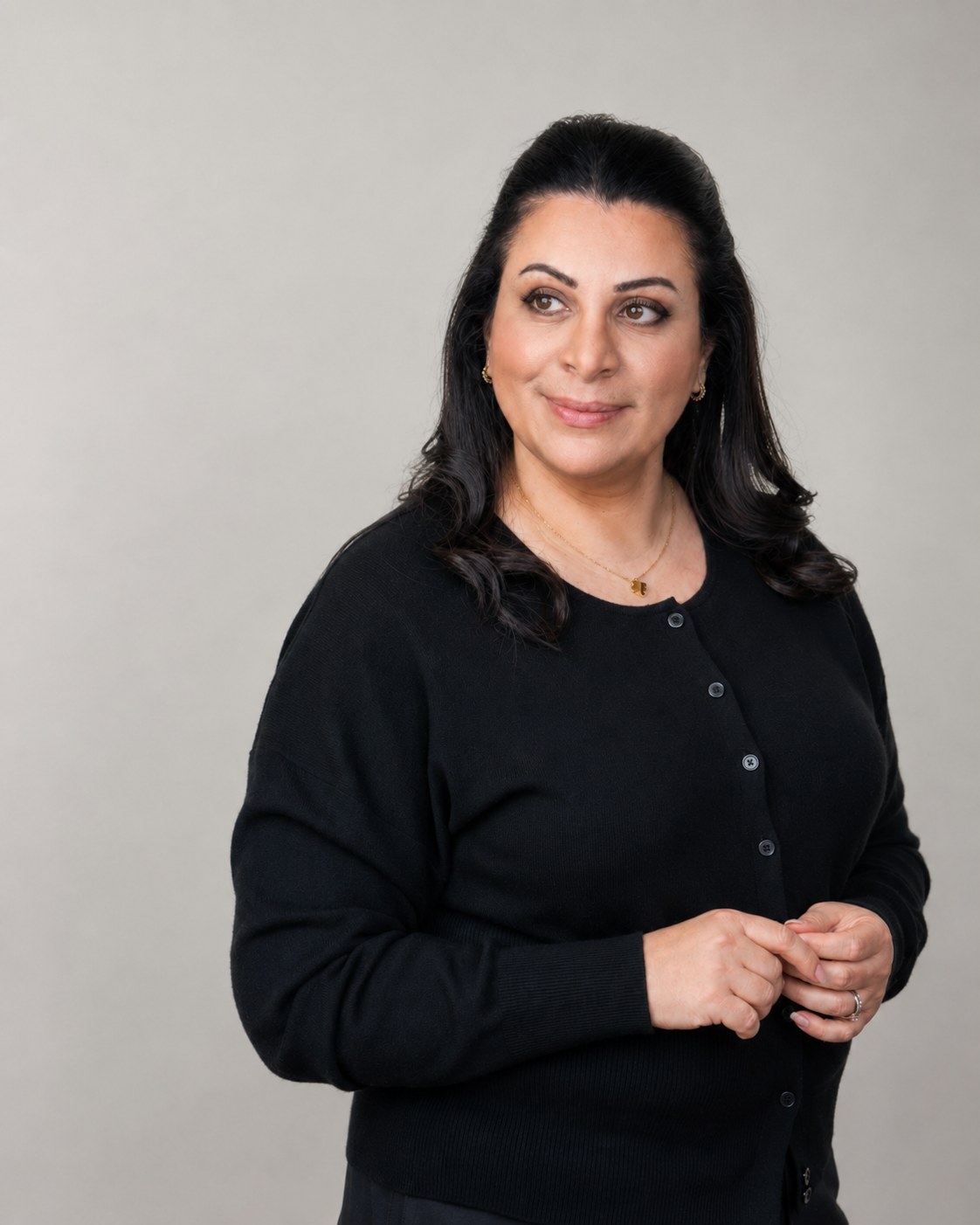
Jenny Tate
Mortgage Agent Level 1 · FSRA #M22002086
Jenny Tate is a Mortgage Agent Level 1 with Tango Financial Mortgage (ON) Corporation (FSRA #13691). This article provides general information about down-payment preparation; it does not establish tax eligibility or lender approval.