FHSA vs RRSP: Which Account Should First-Time Buyers Use in 2026?

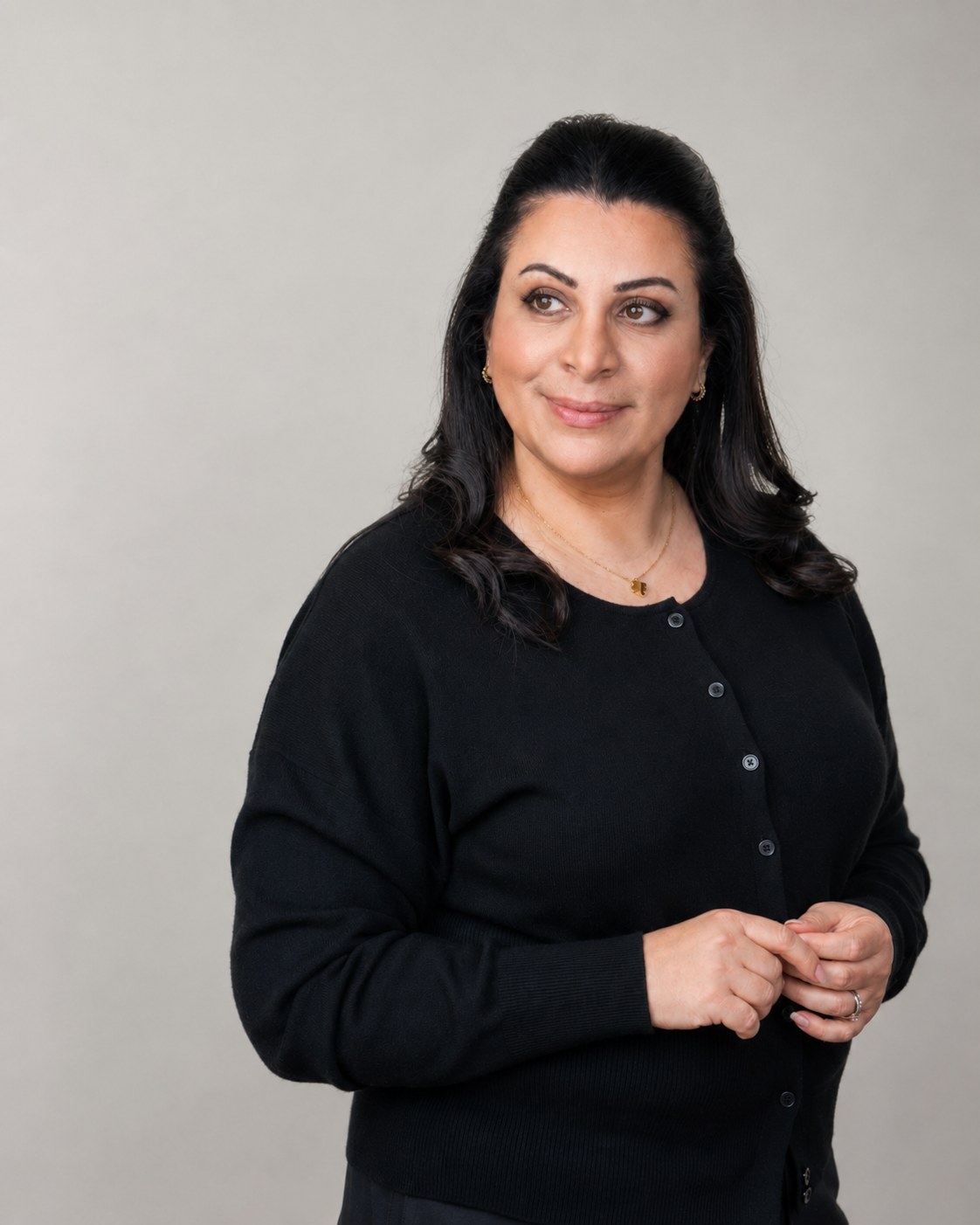 By Jenny Tate
The FHSA versus RRSP question is rarely answered correctly, because most explainers start with the tax mechanics and stop there. The right framing: the FHSA is for buyers; the Home Buyers' Plan is for already-savers who happen to be buying. Different vehicles for different starting points.
Both accounts pull from the same pre-tax dollar bucket, so the choice has real consequences. A Toronto buyer who maxes the FHSA over five years and never opens an RRSP looks very different at the mortgage table than one who has accumulated $60,000 in an RRSP and pulls it out through the HBP. For first-time buyers planning a 2026 or 2027 purchase, this guide walks through what each account does, when stacking both makes sense, and the lender-side details most posts ignore. The companion to this one is our first-time buyer playbook for Toronto.
Short answer
For most Canadian first-time buyers, the FHSA wins because withdrawals are tax-free with no repayment required, while the RRSP Home Buyers' Plan ($60,000 per person post-April-2024) requires 15-year repayment. You can stack both: $100,000 per person, $200,000 per couple. The catch most buyers miss: open the FHSA at least one full calendar year before you plan to withdraw, because the qualifying clock starts on account opening, not first contribution.
The framework: which account fits which buyer
In plain English, there are three first-time buyer profiles and the right account stack is different for each.
- The Patient Saver: 3-5 years out, no existing RRSP, building a down payment from scratch. FHSA wins, full stop.
- The Established Earner: already has $40K+ in an RRSP from previous years, buying within 12 months. HBP is on the table, and a combo is usually optimal.
- The Late Starter: buying within 12 months, no FHSA opened yet, modest RRSP. The window for both is open but tight, and sequencing matters.
The mistake most explainers make: treating FHSA and HBP as alternatives. They are not. The combined ceiling per person is $40,000 (FHSA) plus $60,000 (HBP), so $100,000. A couple can access $200,000 in registered down-payment funds. That is not a competing choice, it is two separate buckets you can withdraw from in the same closing.
The catch: each account has its own qualifying window. The FHSA must be open at least one calendar year before withdrawal (this is the rule that surprises most last-minute buyers). The HBP requires funds to have been in the RRSP at least 90 days before withdrawal. Plan 18 months out, not 18 days.
How the FHSA actually works
Run YOUR numbers
Model your future mortgage payment based on the down payment you're saving toward.
Open the mortgage payment calculatorThe Government of Canada launched the FHSA in April 2023. Per the CRA, the mechanics are:
- Contribution limit: $8,000 per year, $40,000 lifetime.
- Carry-forward room: Up to $8,000 of unused room carries forward, but only after the account is opened. Opening late does not back-fill prior years.
- Tax treatment of contributions: Deductible against income, the same way RRSP contributions are. You can claim the deduction in the year you contribute or carry it forward to a higher-tax year.
- Tax treatment of withdrawals: Withdrawals for a qualifying home purchase are tax-free with no repayment requirement. The money is yours, clean.
- Account lifespan: Must close within 15 years of opening, or by December 31 of the year you turn 71, whichever is first.
The deduction-carry-forward feature is underused. A buyer earning $80,000 today can contribute $8,000 to the FHSA this year, then carry the deduction into a higher-tax year (after a promotion, after a job change to higher income, or after starting a side business). At a 33% marginal rate, that deduction is worth $2,640. At a 43% rate, it is worth $3,440. Same contribution, $800 more in tax recovery just from timing.
Eligibility per the CRA: resident of Canada, at least 18 years old, and you have not lived in a home that you or your spouse owned in the current calendar year or any of the four preceding years. The home must be in Canada and become your principal residence within one year of purchase.
How the RRSP Home Buyers' Plan actually works
The HBP has been around since 1992. The April 2024 federal budget raised the per-person limit from $35,000 to $60,000, which is the relevant number for any 2026 purchase. Per the CRA:
- Withdrawal limit: $60,000 per person, $120,000 per couple.
- Repayment schedule: 1/15 of the withdrawn amount each year over 15 years. On a full $60,000 withdrawal, that is $4,000 annually back into your RRSP.
- Repayment grace: Standard is starting Year 2 after withdrawal. For HBP withdrawals between 2022 and 2025, the federal budget extended the grace period to Year 5 (this is temporary and applies only to those specific years).
- Missed repayments: Treated as taxable income for that year. At a 33% marginal rate, a missed $4,000 repayment costs $1,320 in extra tax that year.
- 90-day rule: Funds must have been in the RRSP at least 90 days before withdrawal. Last-minute RRSP contributions to fund an HBP withdrawal do not qualify.
The catch: HBP is not free money. It is a loan from your retirement self to your present self. Across 15 years of inconsistent repayment, it is easy to accumulate $5,000-$8,000 in unnecessary tax just from missed schedules. The right way to handle this is to set up an automated RRSP contribution from day one of the repayment window, not to "try to remember" each spring.
Stacking FHSA and HBP: the combo strategy

Single buyer max: $100,000 from registered accounts. Couple max: $200,000. These stack cleanly because the FHSA withdrawal does not count against your HBP limit and vice versa. You can use both in the same closing.
Here is the math for a couple planning a Toronto purchase in 36 months:
- Year 1: each partner opens an FHSA, contributes $8,000.
- Year 2: each adds $8,000 to FHSA ($16,000 each, plus growth).
- Year 3: each adds $8,000 to FHSA, plus starts building an RRSP balance if they did not have one. Goal is to have $30,000 each in RRSP by the close of Year 3.
- Year 4 (purchase year): each partner withdraws $24,000 from FHSA tax-free (subtotal $48,000 to closing) and up to $30,000 from RRSP via HBP (subtotal $60,000 to closing). Total: $108,000 toward down payment.
Sequencing matters more than most explainers admit. The FHSA must be open across at least one calendar year before withdrawal. The HBP requires 90 days between contribution and withdrawal. A buyer who tries to set both up in the same quarter as their offer will lose access to one or both.
Comparison table and a worked example
| Feature | FHSA | RRSP HBP |
|---|---|---|
| Per-person maximum | $40,000 lifetime | $60,000 per withdrawal |
| Couple maximum | $80,000 | $120,000 |
| Contributions tax-deductible | Yes | Yes |
| Withdrawals tax-free | Yes, for qualifying home | Yes, if repaid on schedule |
| Repayment required | No | Yes, 1/15 annually over 15 years |
| Qualifying window | Account open ≥ 1 calendar year | Funds in RRSP ≥ 90 days |
| If you do not buy a home | Transfer to RRSP penalty-free | Funds stay in RRSP, no withdrawal |
| Combined ceiling (single) | $100,000 | |
| Combined ceiling (couple) | $200,000 | |
Numbers reflect CRA rules current as of May 2026. The HBP $60,000 ceiling is post-April 2024 budget. Always verify with the CRA or a licensed advisor before withdrawing.
Worked example, couple buying a $700,000 Toronto property at 20% down for an uninsured mortgage:
- Option A (FHSA only): Both partners max FHSA at $40,000 each, $80,000 combined. Need $60,000 more from cash or family gift.
- Option B (HBP only): Both partners withdraw $60,000 each via HBP, $120,000 combined. Need $20,000 more, plus $8,000 combined annual repayment for 15 years.
- Option C (combo): $80,000 FHSA plus $60,000 HBP equals $140,000. Down payment fully covered, no top-up needed. Repayment: $2,000 per partner per year for 15 years, set up as automated RRSP contributions.
Option C wins on closing flexibility and reduces repayment pressure by spreading the HBP across both partners. Option A wins on simplicity. Option B is the least efficient for a couple, because both partners are taking on full repayment when the FHSA half could have been free and clear.
Archetypes: who needs what
The 27-year-old building from scratch
Five-plus years out from purchase, no existing RRSP, modest income. FHSA is the entire answer. Open the account now even with $0 in it, because the one-calendar-year clock starts on account opening, not on first dollar. Skip the RRSP unless your employer matches contributions; that money is better staying liquid for the FHSA.
The 35-year-old with an existing RRSP
Has accumulated $60,000-$80,000 in retirement savings, now buying within 12 months. HBP is available, but the 15-year repayment commitment matters. At a 43% marginal rate, missing three years of $4,000 repayments costs $5,160 in extra tax across that span. Recommendation: HBP only if you can demonstrably commit to automated repayment from day one.
The Bank of Mom and Dad recipient
Down payment partly funded by a family gift. The FHSA still makes sense for the buyer's own share. The gift portion lives in a non-registered account and gets no tax shelter. Pro tip: the gift letter timing matters for mortgage underwriting. Most lenders require gifted funds to be in the buyer's account at least 90 days before close (this is the same window as the HBP, which is helpful for memorization).
The dual-income couple
Both partners have FHSA contribution room and RRSP capacity. Stack to the $200,000 combined ceiling if your purchase price warrants it. Both partners qualify as first-time buyers if neither has owned a principal residence in the last four calendar years, per CRA's "first-time buyer" definition. This includes returnee buyers who sold and waited out the window.
The self-employed first-time buyer
Income is non-T4, which means you have some control over income recognition. FHSA contributions reduce taxable income, which is meaningful when you are self-employed and choosing how much to draw from the business in a given year. Stacking FHSA plus RRSP contribution can dramatically lower the self-employed tax bill in the year before purchase. The lender side has its own wrinkles, covered in our self-employed mortgage path in Canada.
"The biggest miss I see is buyers who open their FHSA in the same year they are house-hunting. The one-calendar-year rule means a withdrawal in March 2026 needed the account to be open by December 31, 2024, not 2025. Open the account now even if you cannot contribute yet. The clock starts on account opening, not on first dollar in."
Jenny Tate, Mortgage Agent Level 1, FSRA #M22002086
The mortgage approval angle
Lenders see your registered accounts differently than you do. Funds in the FHSA or RRSP are eligible for the down payment after withdrawal, but the lender wants to see them "sourced." Typically this means the funds have been in the account at least 90 days before close, with a clean paper trail showing where the contributions came from (employment income, transfer from TFSA, etc.).
A buyer pulling FHSA at closing typically needs to show: the FHSA statement with the current balance, withdrawal documentation matching the disbursement, and source documentation for the original contributions. The cleaner the paper trail, the less friction at underwriting.
The stress test still applies regardless of where your down payment comes from. Per OSFI's B-20 guideline, you qualify at the greater of 5.25% or contract rate plus 2%. With 5-year fixed rates in the high 4s to low 5s in May 2026, that means a contract rate of 4.79% qualifies at 6.79%. Your down payment from the FHSA or HBP reduces the mortgage size, which makes the stress test easier, but does not change the qualifying rate itself. The mechanics are walked through in our Canadian mortgage stress test overview.
The CMHC angle is where the FHSA-plus-HBP combo really pays off. With under 20% down, CMHC default insurance applies and gets added to the mortgage. Per the current CMHC premium schedule: 4.00% at 5%-9.99% down, 3.10% at 10%-14.99%, 2.80% at 15%-19.99%, and 0% at 20% or more. On a $700,000 Toronto purchase, pushing your down payment from 19.5% to 20.0% eliminates the 2.80% premium on the entire insured mortgage, saving roughly $15,400 upfront. The FHSA-plus-HBP combo is often what gets buyers over that 20% line.
What to do this month
The FHSA wins for buyers with time. The HBP wins for buyers with existing RRSP balances. The combo wins for buyers who plan 18 months out and can absorb the repayment discipline. Generic "FHSA is better" advice misses the actual fact pattern.
Practical action this month if you are 12 to 36 months from buying: open an FHSA even with $0 in it, because the account-opening clock starts the moment you sign with your financial institution, not when you first contribute. If you already have an FHSA, confirm the open date in your statements and plan contributions to claim the deduction in your highest-tax year, not necessarily the year you contribute.
For specific numbers on what your mix should look like given your income, your existing RRSP balance, your purchase timeline, and your target down payment, a 15-minute conversation with a Toronto mortgage agent is more useful than another generic explainer. The math is your math, not a textbook's.
Ready to take the next step?
Book a free 15-minute discovery call with Jenny Tate. No obligation, just straight answers about your mortgage situation.
Jenny Tate
Mortgage Agent Level 1 · FSRA #M22002086 · MBA in Finance · Lean Six Sigma Black Belt
Jenny Tate is a licensed mortgage agent serving Toronto, Burlington, and the Greater Toronto Area. With an MBA in Finance, a Lean Six Sigma Black Belt, and access to 50+ lenders, she helps clients secure better mortgage structures. She has earned 50+ five-star Google reviews across the GTA. Licensed with Tango Financial Inc. (FSRA #13691).
Frequently Asked Questions

What's the difference between FHSA and RRSP Home Buyers' Plan?expand_more
The FHSA (First Home Savings Account) is a registered account with $8,000 annual / $40,000 lifetime contribution room. Contributions are tax-deductible and withdrawals for a first home are tax-free with no repayment required. The RRSP Home Buyers' Plan lets you withdraw up to $60,000 from your existing RRSP for a first home, but it must be repaid over 15 years starting Year 3.
Can I use both the FHSA and RRSP HBP together?expand_more
Yes, the two programs stack. A single buyer can access $40,000 (FHSA) + $60,000 (RRSP HBP) = $100,000 of tax-advantaged down payment funds. A couple can combine both accounts for a total of $200,000.
Which is better in 2026: FHSA or RRSP HBP?expand_more
FHSA is generally preferred because withdrawals are tax-free with no repayment requirement, and contributions are still tax-deductible like an RRSP. Use the RRSP HBP only if you already have significant RRSP balances, or if you need more than $40,000 lifetime tax-advantaged room.
Can I transfer money from my RRSP into my FHSA?expand_more
Yes, but the transfer counts against your FHSA contribution room (up to $40,000 lifetime). The transferred amount is not tax-deductible again, but the withdrawal for a first home is still tax-free, which is the FHSA's main advantage over a direct RRSP HBP withdrawal.
Is the FHSA limit $40,000 lifetime per person or per couple?expand_more
$40,000 lifetime per person. Each spouse can have their own FHSA. A couple can therefore combine $80,000 of FHSA contribution capacity.
What happens to my FHSA if I don't buy a home?expand_more
If you don't buy a qualifying first home within 15 years of opening the account, the FHSA must be closed. Funds can be transferred tax-free to your RRSP without affecting RRSP contribution room, or withdrawn (taxable as regular income).
Can I have an FHSA if I've owned a home before?expand_more
You qualify as a first-time buyer for FHSA purposes if neither you nor your spouse have lived in a home you owned in the current calendar year or any of the four preceding years. The 4-year rule mirrors the RRSP HBP definition.